



Maribel 'Belle' Stikeleather Helps Neurodivergent People Find Community
This article is part of the series In Their Own Words, proudly presented by Gulf Coast Community Foundation.
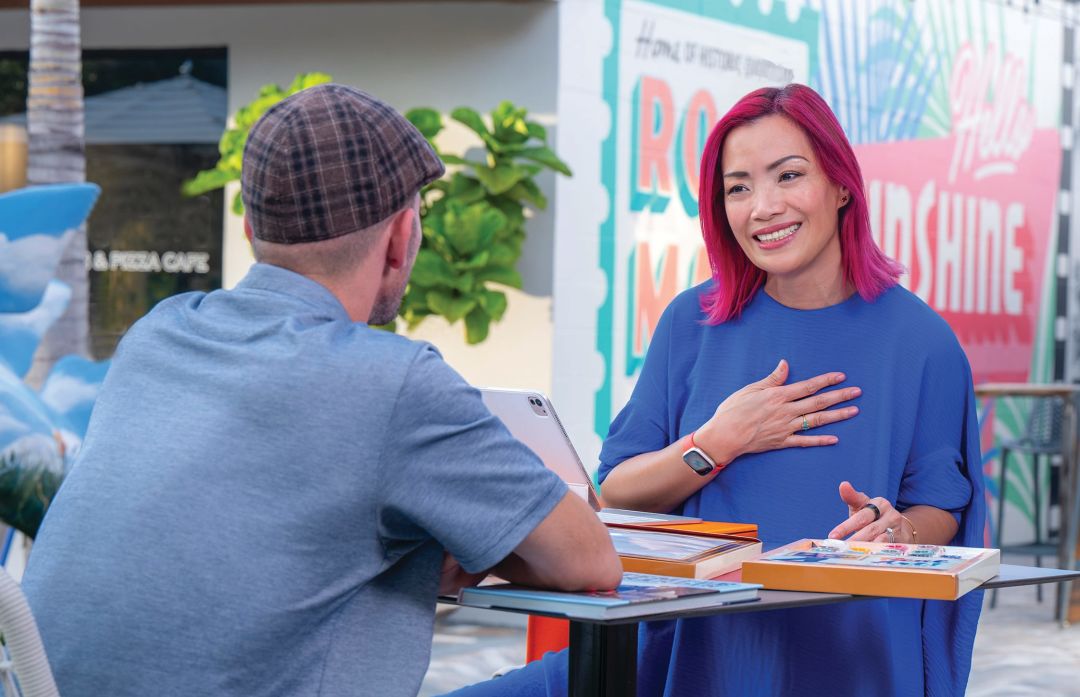
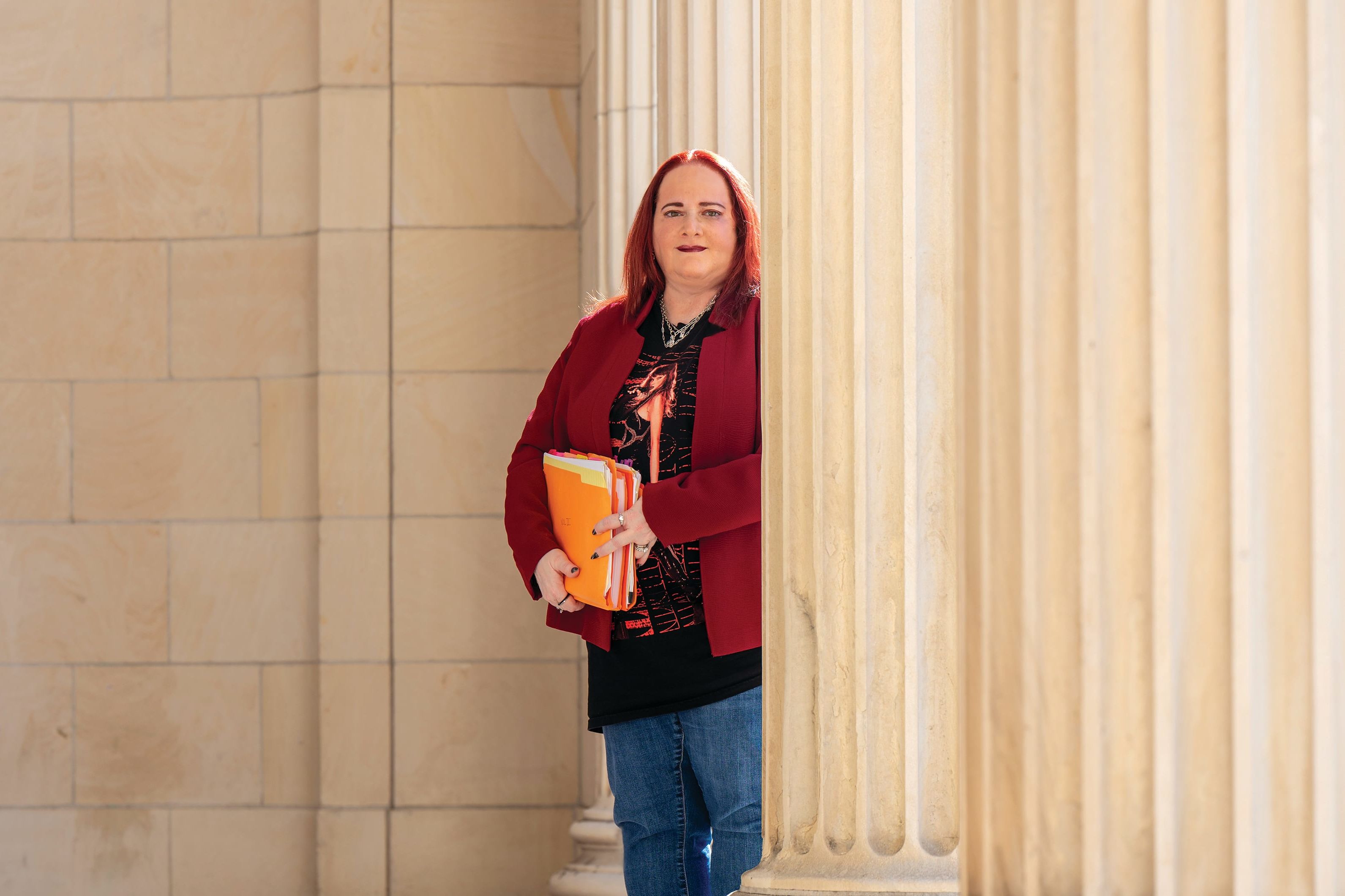
Image: Barbara Banks
When Maribel “Belle” Stikeleather founded Behavioral Teaching Solutions (BTS), her goal was to create a world where individuals with autism, developmental differences and mental health challenges were empowered to thrive. From coaching to community building, her work focuses on dismantling stigmas and cultivating awareness and inclusion.
Stikeleather’s passion for this cause grew from a journey that began as a special education teacher in her native Philippines and the United Arab Emirates and later as a coach and clinical director in California. Now based in Sarasota, she recently launched “Spectrum Speaks,” a series of events that connects the neurodivergent community and creates opportunities for their voices to be heard and their talents to shine. (The term neurodivergent refers to individuals whose brain differences affect how their brains function, meaning they have different strengths and challenges.)
Stikeleather recently spoke with Sarasota Magazine about the inspiration behind her work and what a truly inclusive Sarasota might look like. This interview has been edited for length and clarity.
Tell us about your current focus with Behavioral Teaching Solutions.
“I founded Behavioral Teaching Solutions in 2019 to expand special education support and autism awareness in Southeast Asia, and I later registered it in the U.S. to continue that mission here. Today, my work centers on training, systems design and coaching rather than one-on-one therapy. Our programs serve children, youth and adults, with a growing emphasis on neurodivergent adults and community inclusion. We offer them pathways to personal development, leadership and employment—fostering environments where individuals can participate and thrive, rather than simply receive services.”
Was there a moment or person that inspired your focus on autism and neurodiversity?
“My first assignment as a licensed teacher in the Philippines was as a shadow teacher to an autistic boy who was about eight years old. One day, he had a meltdown and began banging his head on the floor. I wanted to help him but lacked the training. The Philippines is a developing country, and my post-baccalaureate in special education had offered very few specifics, so I knew I’d eventually need to explore resources outside the country.
“My father had moved to Abu Dhabi, and in 2007, I joined him there to look for a teaching position. I got a job at a special needs center, working with students with severe behavioral challenges, from hair pulling to physical aggression. Earning my certification in Applied Behavior Analysis (ABA) helped me understand how learning and behavior are shaped by one’s environment. My supervisor introduced me to an innovative program called the Competent Learner Model (CLM), developed by Vicci Tucci, which helps individuals build skills for learning, participation and independence through a constructive approach.
“After Tucci visited my school in 2015 and observed my work, she invited me to California to help train her staff. I became a certified CLM coach, training teachers and staff in autism programs across the UAE. I ended up moving to California and working with her organization, serving as clinical director and behavioral health consultant in the Monterey region, coaching therapists and parents to apply these principles at home and in schools.”
How does the Competent Learner Model work?
“It’s a structured framework that focuses on developing seven core skills—participating, observing, listening, communicating, reading, writing, and problem-solving—that form the foundation for academic and social learning.”
What brought you to Sarasota, and how have you found the community here?
“In 2017, I met my husband, Greg, also a behavior analyst, at a conference in California. In 2021, we decided we wanted to leave California. Some of Greg’s friends lived in Sarasota, and we knew we had to visit. Once we did, we fell in love with the area.
“I began talking to people about my expertise in behavioral health and, over time, connected with others passionate about neurodiversity awareness, including Beaver Shriver, who founded Inclusion Revolution, and Paul Sykes, owner of Art Avenue gallery and father of an autistic son. I’d worked as a wedding coordinator before becoming a teacher and always loved planning events, so I began hosting small gatherings at Paul’s space with people who have [autism and developmental differences] that combined art exhibitions, live music and guest speakers.”
How did “Spectrum Speaks” come about?
“I wanted to use my platform to connect with others and spark new ideas and opportunities, especially around neurodiversity. Studies show that up to 85 percent of autistic adults are unemployed—not because of ability, but lack of opportunity—and neurodivergent adults often have co-morbidities and other diagnoses such as bipolar disorder, depression, anxiety and more.
“That led me to launch ‘Spectrum Speaks.’ Our first event, ‘Creating Allies for Autism Awareness,’ was in April 2025 and featured multiple speakers on the topics of empowering neurodivergent individuals. Since then, we’ve hosted a Disability Pride Awareness Walk and a sold-out event at Florida Studio Theatre with retired U.S. Army Major Gen. Gregg Martin, the author of Bipolar General, which chronicles his journey with bipolar disorder. Martin spoke about struggling for years, personally and professionally, before receiving his diagnosis; about his struggle to find the right medication; and about the impact on his family and career. It highlighted the connection between mental health, leadership and resilience, reminding the community that inclusion means addressing the whole person, not just a diagnosis. The event also incorporated live music by Paul Sykes on violin and his autistic son, Alex, on piano, as well as a conversation between two autistic young adults called ‘Friendship on the Spectrum.’
“’Spectrum Speaks’ has monthly gatherings, group coaching and check-ins (in-person and via Zoom), creative outlets, job and life-skills discussions, and leadership opportunities.”
Art and music play a big role in your events. Why?
“Creative expression is a universal language. Audience members often share how these performances change their perceptions. They realize autism and neurodiversity aren’t limitations but different ways of experiencing and contributing to the world.
“My hope is to grow these gatherings into even larger events that showcase the talents of individuals with unique abilities—celebrations where neurodivergent adults can come together, enjoy themselves and always attend free of charge.”
What would an inclusive Sarasota look like to you?
“I’d love to see more neurodivergent adults visible and engaged in everyday life—in parks, restaurants and community events—with better access to housing and employment. I also envision more sensory-friendly, accessible environments and fewer stigmas that cast neurodivergent individuals as people to be cautious of, rather than celebrated members of the community.”
This article is part of the series In Their Own Words, proudly presented by Gulf Coast Community Foundation.