



Emmy Award-Winning Journalist Julian Phillips on Media, Food and Conversation
This article is part of the series In Their Own Words, proudly presented by Gulf Coast Community Foundation.


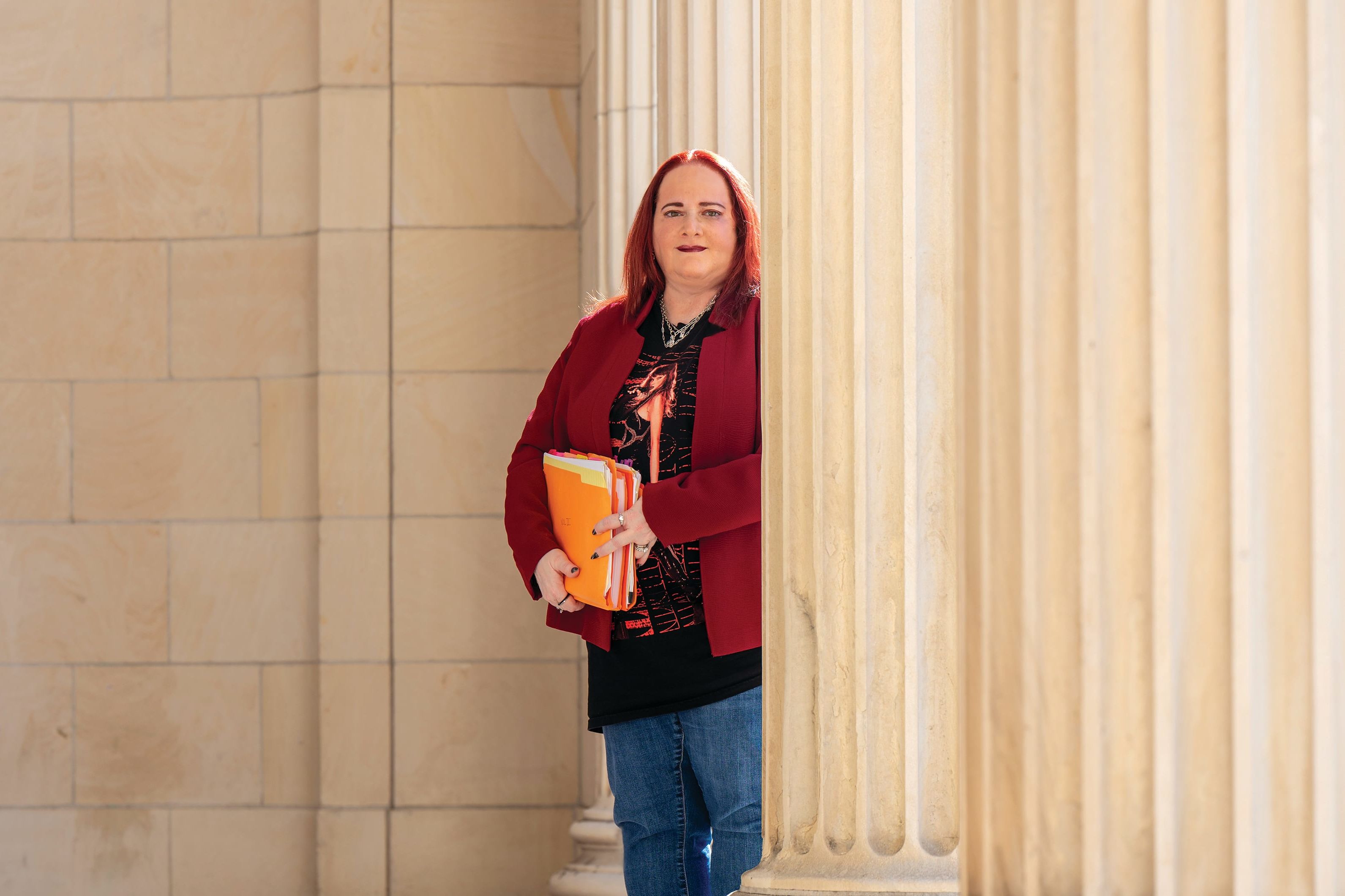
Image: Barbara Banks
Julian Phillips arrived in Sarasota in August 2024 without fanfare—the way people do when they’re not trying to reinvent themselves so much as recalibrate. After decades in television news, from New York local stations to national cable at Fox News, including Fox & Friends Weekend, Phillips chose to move to a city he’d visited but never inhabited. Phillips’ career has placed him on both sides of the microphone. Beyond Fox News, he reported for and hosted shows in major newsrooms for more than 30 years. He also served as the public voice of the New York City Police Department as Deputy Commissioner of Public Information.
Food became an important theme in his life, too. He’s the creator and host of Eat & Argue, a PBS series featuring moderated dinner table discussions about politics and current events. He was also co-owner of The Sound Bite, a news-themed jazz restaurant he co-owned in New York City’s Hell’s Kitchen neighborhood.
Along the way, Phillips won three Emmy Awards for journalism, and his Cajun-Southern-Italian fusion cooking also earned accolades, including being named “Best Wings in New York State” in 2018 by Insider Food. Phillips, who’s married to internationally acclaimed jazz vocalist Barbara King, says he’s “old enough to say whatever I want to say.” We’re listening. This interview has been edited for length and clarity.
Why Sarasota?
“We’d been visiting for years. The warmth mattered. The culture mattered. We wanted a place where Barbara could thrive musically, too.”
Your media career was highly visible. How do you think about it now?
“When I got into reporting at WNBC [in New York] in 1989, I saw myself as a servant. Journalism wasn’t about money. It was about making a difference.
“At Fox News, I was the first full-time Black male anchor hired in 2002. Roger Ailes called me ‘the liberal guy.’ I anchored Fox News Live when it was still fairly straight. Later, they moved me to Fox & Friends Weekend. I knew once I started speaking honestly about my beliefs, things would change. “For four years, I debated whoever they put up from the right. When the matchups changed, I was taken off the show. I asked to be let out of my contract. Eventually, I was.”
What happened next?
“Nothing. No offers. This was 2006. MSNBC mentioned freelance reporting work, which was unheard of then for a transitioning news host. I passed. Months went by.
“Years later, I was told I’d been blackballed. Then the banking crisis hit. We couldn’t sell our house. Two weeks before foreclosure, then-[New York] Congressman Ed Towns called and offered me a communications director job. It was a lifesaver.”
What was it like working for the New York City Police Department?
“They approached me about becoming Deputy Commissioner of Public Information. I was 66. I didn’t want the job. I even asked if I’d really have to respond to every crime at all hours. I figured that ended it. It didn’t.
“It was 2022. I was the first African American to hold the post. You’re
responsible for communications for about 55,000 officers and civilians. Our press operation is arguably second only to the White House. It was 24/7, and you could be called for a Level 3 response and have to jump in immediately. The role is also political, and you’re walking a fine line between the department, the mayor, the public and the press, all within a billion-dollar operation.”
Before taking this job, you stayed busy as a media consultant and authored two books, “Discovering Your Hidden Power: Unleashing the Power of Words” with Dr. A.R. Bernard and “Empirical Evidence, 16 Short Stories on God's Presence”.
In 2017, you opened The Sound Bite. What was that?
“It was a news-themed restaurant in Hell’s Kitchen, decorated like a newsroom. I was the chef. Barbara handled the music. “My wings became the most popular dish. I got into Cajun cooking, worked with Paul Prudhomme’s staff, developed a spice blend, and even went to China trying to sell it. I called it ‘A Taste of Two Cities’—New Orleans and New York.”
Later, in 2023, you hosted the PBS series Eat & Argue, which you call your crowning achievement. Why?
“Because it’s honest. Democracy only works if you participate. We stayed at the table and examined hard statements from guests, like, ‘Not everyone who voted for Trump is a racist, but every racist voted for Trump.’
How does Sarasota feel to you, politically and culturally?
“It feels purple in a very red state. When we arrived, there were Trump signs everywhere. Now [there are] fewer flags. I don’t know if that’s fatigue or something else.
“What’s different from New York is how people treat you. Most people here are genuinely kind. I haven’t had a bad experience so far—that willingness to treat you as human matters.”
How has your newsroom experience shaped how you see the national narrative?
“We used to argue about what was actually a story. There was questioning and follow-up. That’s rare now. “When Trump went after journalists like [ABC News chief Washington correspondent] Jonathan Karl, there was a time the press would have pushed back. Now, they don’t. The fringes shape the primaries and the narrative. The old Fourth Estate is gone.
“A friend’s son is getting radicalized in college. I told [my friend] to share real history about [African Americans] Charles Drew and Daniel Hale Williams [both renowned doctors], and NASA mathematician Katherine Johnson. Take him to Black neighborhoods that aren’t stereotypes. No one owns virtue or blame. When people demonize entire groups, they erase history.”
What does real listening require?
“A willingness to have your views challenged. Silence can be a tragedy. If you have a voice and don’t use it, you help maintain the status quo.”
What did working in television news and Fox teach you about belief and patriotism?
“You don’t deserve a belief unless you’re willing to test it. I tested mine.
“[At one point], my parents were forced to drink from segregated fountains. African Americans fought for this country and were still denied housing and other opportunities under the GI Bill. My niece served in Iraq. She’s a liberal. Many liberals who fought and died for this country are six feet under."
Faith comes up often for you. How do you understand it now?
“It’s not separate from my life. I’ve written two Christian books, but faith is about survival. When we had nothing, I prayed. That’s how I got through.”
What’s next?
“I’ve joined my neighborhood’s compliance committee. I’ll write locally if anyone wants to read it. I’m launching a nationwide effort focused on journalism, social justice and global conflict, speaking at colleges. I also do some work on the lecture circuit.
“I haven’t joined a church group yet. I’ve started a prayer group instead.”

This article is part of the series In Their Own Words, proudly presented by Gulf Coast Community Foundation.