



Michael Ramah’s Downtown Apartment Is a Study in Urban Sophistication
Downtown Sarasota is suddenly full of incredible apartments, condos, call them what you will, with each one trying to outdo each other with their own particular “wow” factor.
A view is crucial, and a spectacular one is a big plus. The latest interior décor look seems to be a sort of a coastal vibe quickly veering off into a techie future. There’s a lot of white and a lot of glass. Sometimes too much. A certain familiarity takes over.
And then you see Michael Ramah’s apartment and discover how exciting a totally different approach can be. Ramah’s place would be at home in London, Paris or New York. There’s nothing beachy about it. It has a powerful sophistication that invites you to discover what makes it such a visual delight of order, design, composition and balance.
Let’s start with the view. Ramah’s place really is special. It’s in the One Watergate building that blocks The Ritz-Carlton, Sarasota’s view. There are actually two views, one straight out to the boats in the marina, then another looking south to the city skyline.
But as carefully framed and eye catching as the views are, you are drawn much more to what’s inside. It’s a blend of fine furniture and elegant art with a sense of history (both real and personal). Even more impressive, you’re seeing an encyclopedic knowledge of how to put a room—and a home—together.

Image: Gene Pollux
Ramah is from a large Lebanese family that immigrated from the hills above Beirut to the hills above Agawam, a small farming community in western Massachusetts. In 1972, he got a scholarship to nearby Williams College, a bastion of the preppy look and lifestyle, and majored in art. Williams’ art department at the time was remarkable, famous for producing the best museum directors in the country.
But Ramah didn’t want to work in a museum. He wanted something more exciting—and more lucrative. He became a “strategic planner,” he says, a deliberately vague-sounding career that mixes marketing, polling and problem solving. Ramah rose to prominence as a strategic thinker for multinationals, and it provided him with a life of adventures all over the world, including with Philip Morris International to global public relations company Porter Novelli to jobs with the U.S. Agency for International Development (USAID). The cast of characters he encountered ranged from multinational CEOs to Venezuelan presidential candidates to destitute people with AIDS in Thailand. “That was one of the most rewarding things I ever did,” he remembers—the first global AIDS prevention program in developing economies, undertaken back in 1987. “It was both heartbreaking and rewarding.”
Ramah describes his career as “spent on airplanes,” and he has lived in a lot of interesting places—Washington, Mexico City, New York. But it’s New York that put its stamp on him. He has the air of a sophisticated—but not jaded—New Yorker who knows what to see, where to eat, how to dress and where to shop. In fact, he looks back on shopping all over the world as one of the perks of his eclectic work life.
Ramah’s skill in putting a room together is part intuitive and part the result of his lifelong fascination with design. He immersed himself in the work of master decorators and studied them with delight and passion over the years, culminating in his classic New York apartment, a pre-war co-op on exclusive Sutton Place.
But when he decided to retire, Ramah opted to sell the New York place (the buyer, no fool he, begged that the furniture be included) and move to Sarasota, where he had friends with whom he went back years. And he didn’t want Longboat or a key. He was a New Yorker. He wanted downtown.
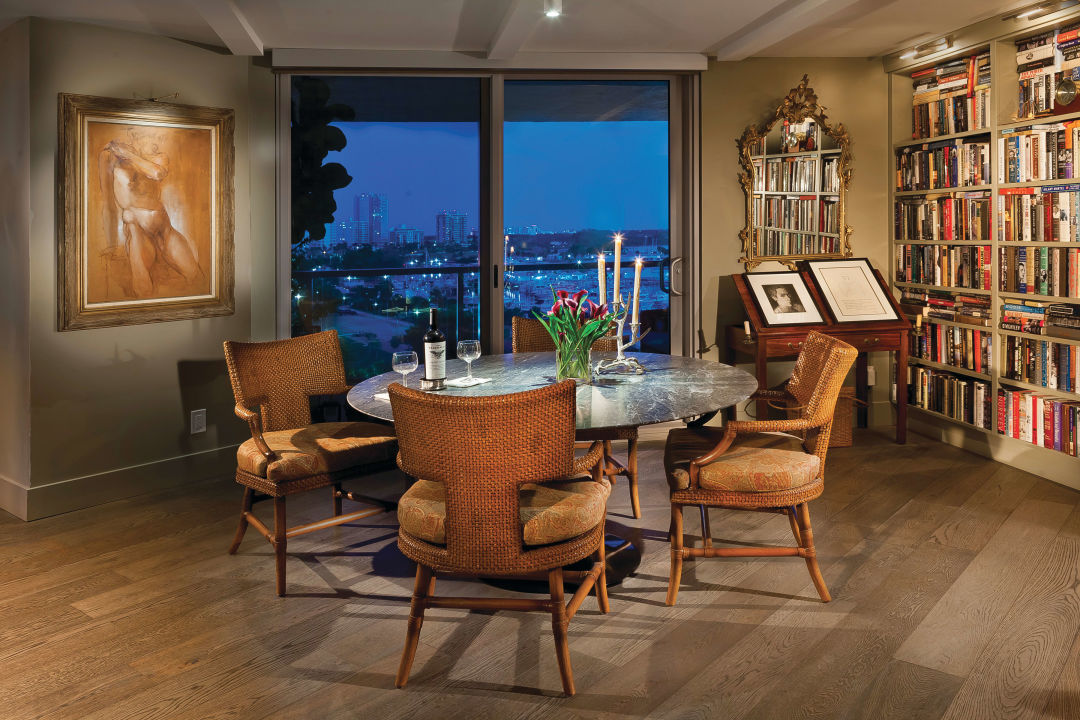
Image: Gene Pollux
The year was 2015 and the skyline was much smaller and quainter. The Holiday Inn (where The Westin Sarasota stands today) had just been torn down, and next to the vacant lot was a condo building called One Watergate, Ramah’s choice for his new home.
Today, after a $10 million renovation, One Watergate is more beautiful than ever, with just enough of its original 1970s look left to make you nostalgic. But when Ramah bought his place, the ’70s were still very much around, with the lobby done in orange, avocado and gold.
Likewise, the apartments were also stuck in the ’70s. “A rabbit warren of little rooms,” he remembers, with needless doors, transoms, dropped ceilings, a half wall in the dining room.
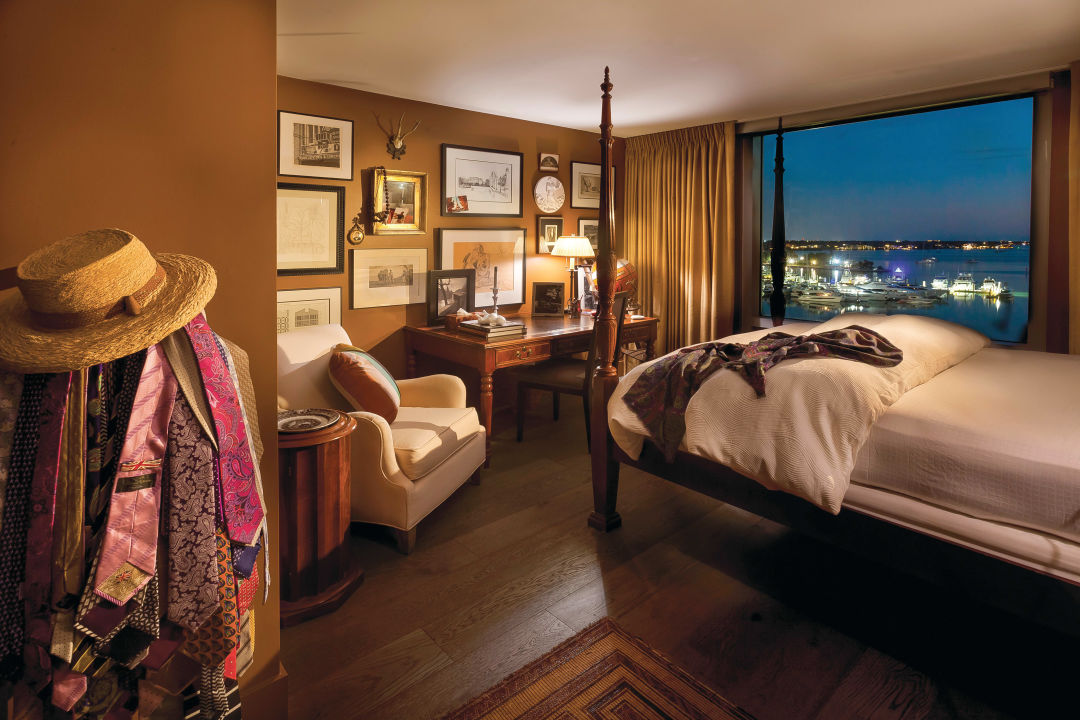
Image: Gene Pollux
But the vibe was right, and Ramah set to work. With the help of his friend Dan Snyder (“a serial renovator,” Ramah says), he had the apartment stripped down to its bare bones, which weren’t bad. It was a great size—about 1,600 square feet—and had a hard-to-find layout—the bedrooms are at opposite ends of the apartment, perfect for visitors.

Image: Gene Pollux
One thing immediately becomes clear. This is one home where the kitchen is definitely not its heart. The heart is located over by the bar and the bookcase. Ramah doesn’t cook much and, as a New Yorker, learned how to do it in a limited amount of space. So, the emphasis here is on the gathering areas. There are two of them—a formal living room and a sort of den/library/dining room. The latter is the picture of comfort, but it’s the formal living room that makes the apartment so noteworthy.
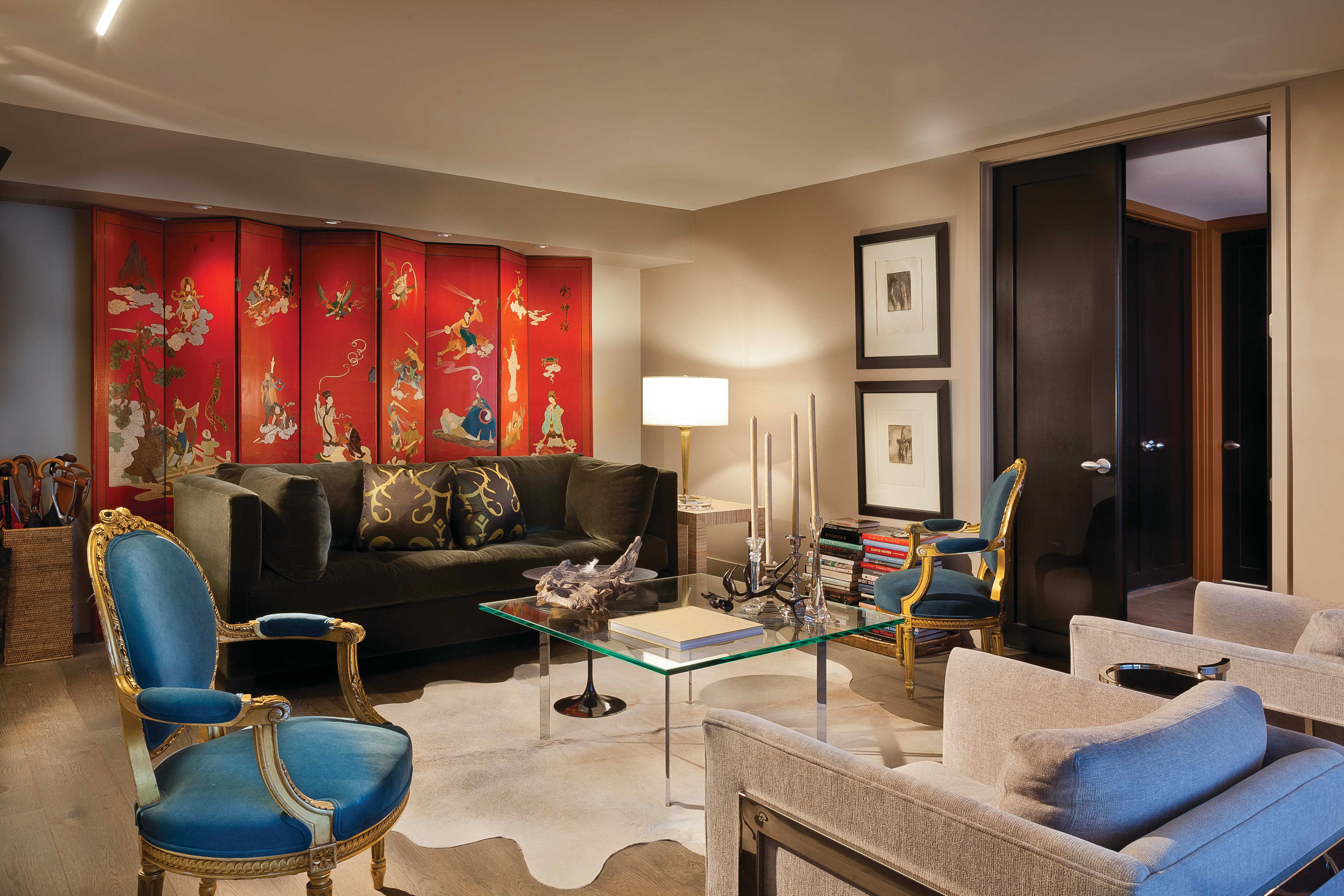
Ramah’s study of American and English decorating of the recent past has focused primarily on three giants of the period: Billy Baldwin, Albert Hadley and David Hicks. His own living room has a touch of all three, with the famous classic, modern Baldwin style most in evidence.
Like Baldwin, Ramah understands the power of bold color. The shade he chose for his living room is hard to define. Is it putty? Is it greige? At any rate, its ambiguity gives the space drama and a little mystery, particularly at night. It also serves to elevate the 8-foot ceiling height. The room is lit in mysterious ways that enhances its drama. There is exactly one lamp. Effects are created by the lights above the paintings.
The choice of furniture also follows another of Baldwin’s precepts—it’s a mix of the old and the new. There is a tuxedo-style sofa facing the terrace, and a pair of elegant Milo Baughman armchairs—modern classics, all of them, with the Baughman chairs particularly noteworthy. Designed back in the 1970s, they are the epitome of late 20th-century glamour and are still in production today. The sofa and chairs are grouped around a steel and glass coffee table, a famous design by Mies Van der Roe.
But it is the pair of Louis XIV chairs, upholstered in peacock blue with wood frames of distressed gold, that give the tailored room a sort of electric jolt. They prove one of Baldwin’s most famous maxims—the finest of classical styles always mix well and complement one another.

Image: Gene Pollux
Two noteworthy paintings in the room also illustrate this principle. One is a large portrait, Drunken Hercules, a figure found on a fountain in Rome by the French Canadian artist Marc Oulette. It’s big and dark and very dramatic. Across the room is something completely different—another portrait, of a manservant carrying a tray, in the Viennese style of the early ’20s, in an elaborate rococo frame. The paintings are totally dissimilar but their quality unites them.
The confrontation between one style and another is called “tension,” and it gives Ramah’s living room its personality. That tension is much less important in the bedroom, a point Ramah illustrates perfectly. Here the walls are also dark—a sort of chocolate brown—but the effect is cozy and luxurious rather than dramatic. Everything seems to be made of wood: the four-poster mahogany bed, the big English table that serves as desk and the antique bedside campaign chests. In addition to the city skyline, the view from the bed is a gallery wall of art, mostly black and white, mostly personal, with a Matisse print thrown in.
There is no TV in the bedroom, but you will see a tremendous number of books. Ramah is one of a dying breed: the avid reader. “My aunt owned a bookstore, and my mother was a voracious reader,” he explains. “As a kid, I read the encyclopedia volume by volume.”
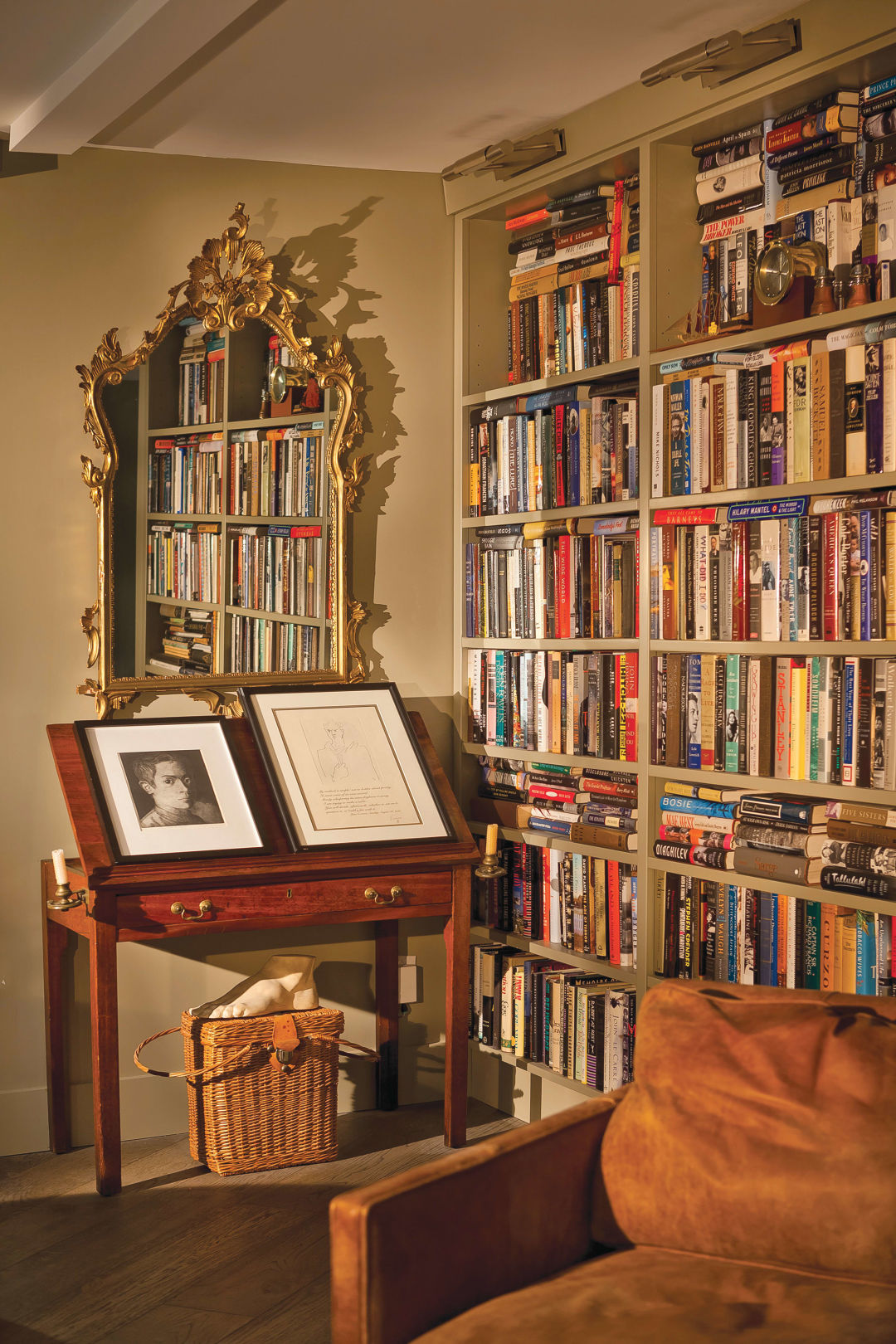
Image: Gene Pollux
They say books are the best decorative item you can possess, and here Ramah is rich indeed. There’s even a dual stack of coffee table books in the living room, so high they double as a side table. But the real library is in the room that also serves as a den and dining room, and it is a literary showplace, a wall of books, arranged informally but in perfect balance and very well used. His collection of deluxe volumes about great homes and their interiors is enormous, but you’ll also find spy
novels, literary fiction (he just finished Flesh by David Szalay and is reading Mona’s Eyes by Thomas Schlesser), and there are also several shelves of biographies and Civil War history.
The wall of books provides a background for the round dining table. Guests look out on one of the terraces with the marina beyond. It’s the perfect setting for a dinner party of six. Here you’ll also find the TV and a selection of personal objects collected over the years—family photos and treasures found on travels throughout the world. Each tells a story. Almost everything in the home does.
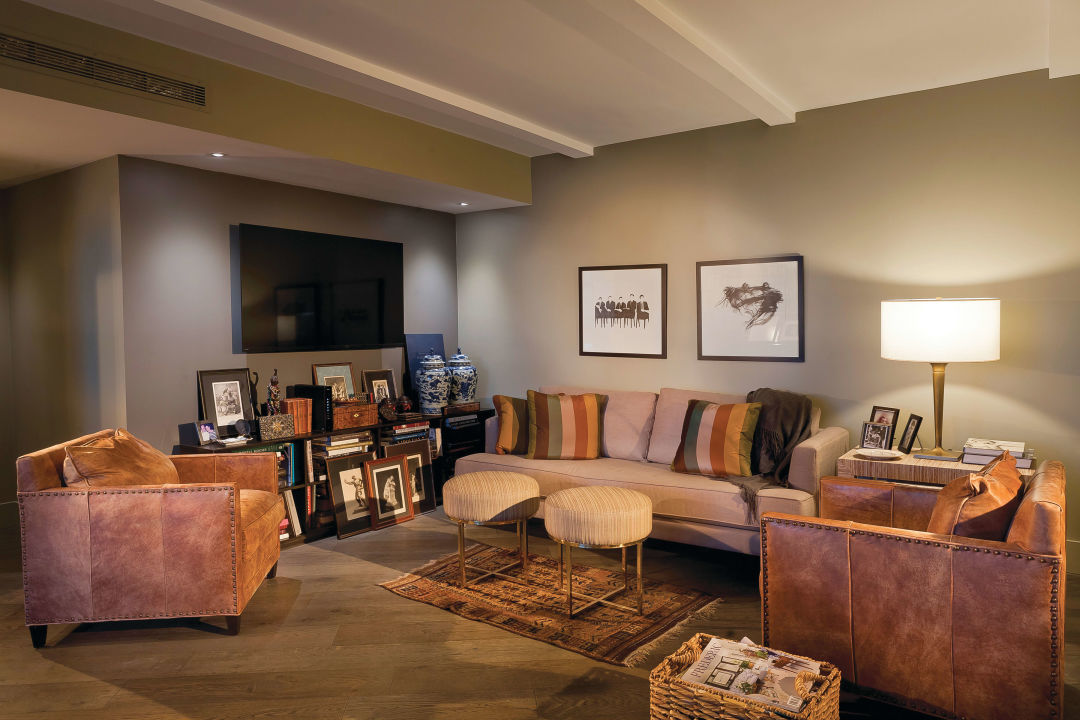
Image: Gene Pollux
Ramah’s lifestyle is more urban than that of the average Sarasotan. I didn’t notice any golf clubs in the corner. You’re more likely to find him at the symphony or the opera, hanging out with a group of friends whose homes are as impressive (almost) as his. He spends every spring through mid-summer in Provincetown, Mass., where he reconnects with his New England heritage and another set of old friends.
After 10 years downtown, he has now become an old-timer, and his lifestyle sounds like the template of what all the newcomers in $5 million condos are aspiring to. Yes, there’s a great deal of walking. “It’s easy to walk for almost everything I need,” he says. One of his favorite destinations is the Rosemary District. “I like its edge,” he explains, not to mention the food at Project.
In fact, being able to walk to lunch in the informal cafés that line Main Street is one of downtown’s greatest pleasures. Ramah particularly likes places like vegan-friendly Lila and the classic French café C’est La Vie. After lunch, it’s fun to poke around Home Resource in the Rosemary District and downtown’s vintage stores, and rumor has it that his portrait hangs in Bookstore1, right over the cash register.
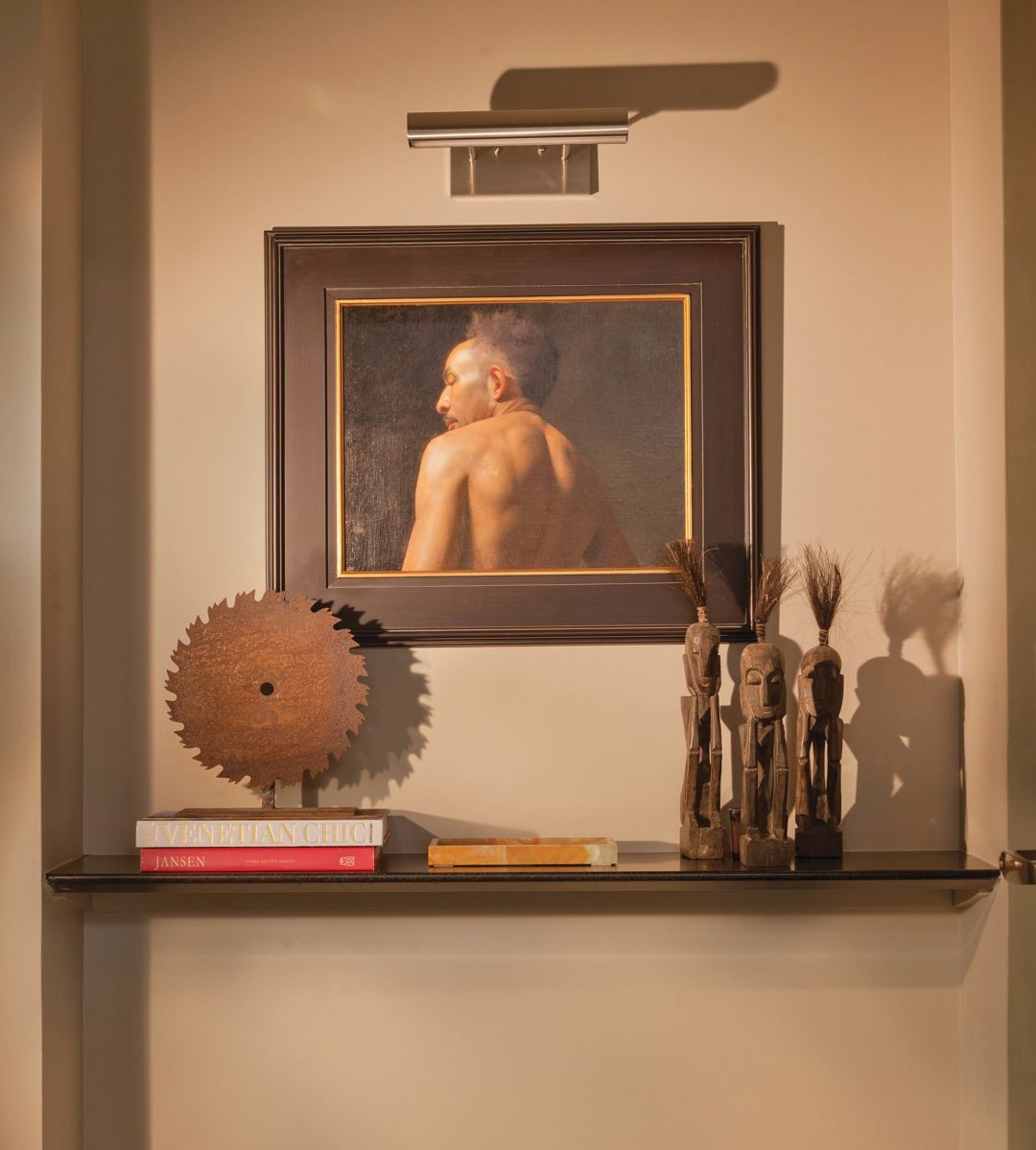
Image: Gene Pollux
Ramah’s home is that rare example of a home designed and decorated by an amateur that rises to a professional level. He has studied the masters and learned their rules, yet this is first and foremost, his life, his personal history, his prized possessions, how he looks at beauty and art.
As we sat in the living room, I admired the 12-foot-long Chinese screen that dominated one wall. He found it on a trip to Hong Kong. It was red and created such a bold color choice in a room full of other strong colors. “It’s very dramatic to put something so big and red in a room like this,” I commented.
“No, no, no,” he said. “That’s not red.”
“Then what is it?”
“Tomato,” he said with a knowing smile.