


Triangle Ranch Preserves Florida Cracker History
On a late December morning on Triangle Ranch, Elizabeth Moore, blonde hair grazing her shoulders and wearing a sunny yellow tennis outfit with matching rubber boots, hops aboard a side-by-side (a souped-up, all-terrain, gas-powered golf cart and tractor hybrid) alongside her property manager Jason McKendree and his wife, Leann. She's heading out to inspect the cabins that she built to remember the Florida Cracker life of the mid-19th and early 20th centuries. The morning is chilly, and the mist is rising from the pasture as the sun warms the air.

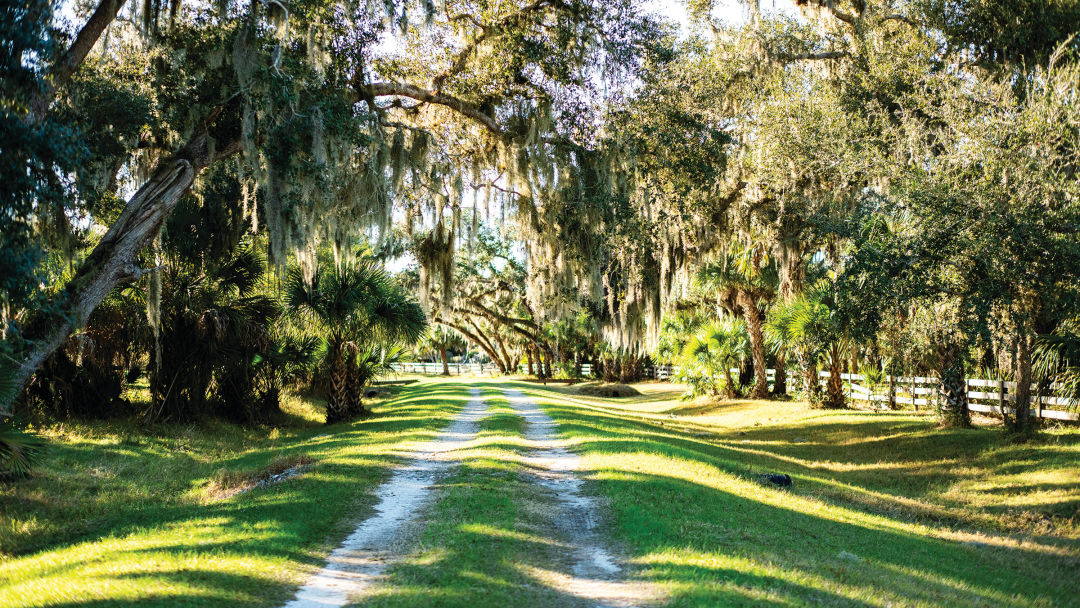
Image: Nicole Moriarity
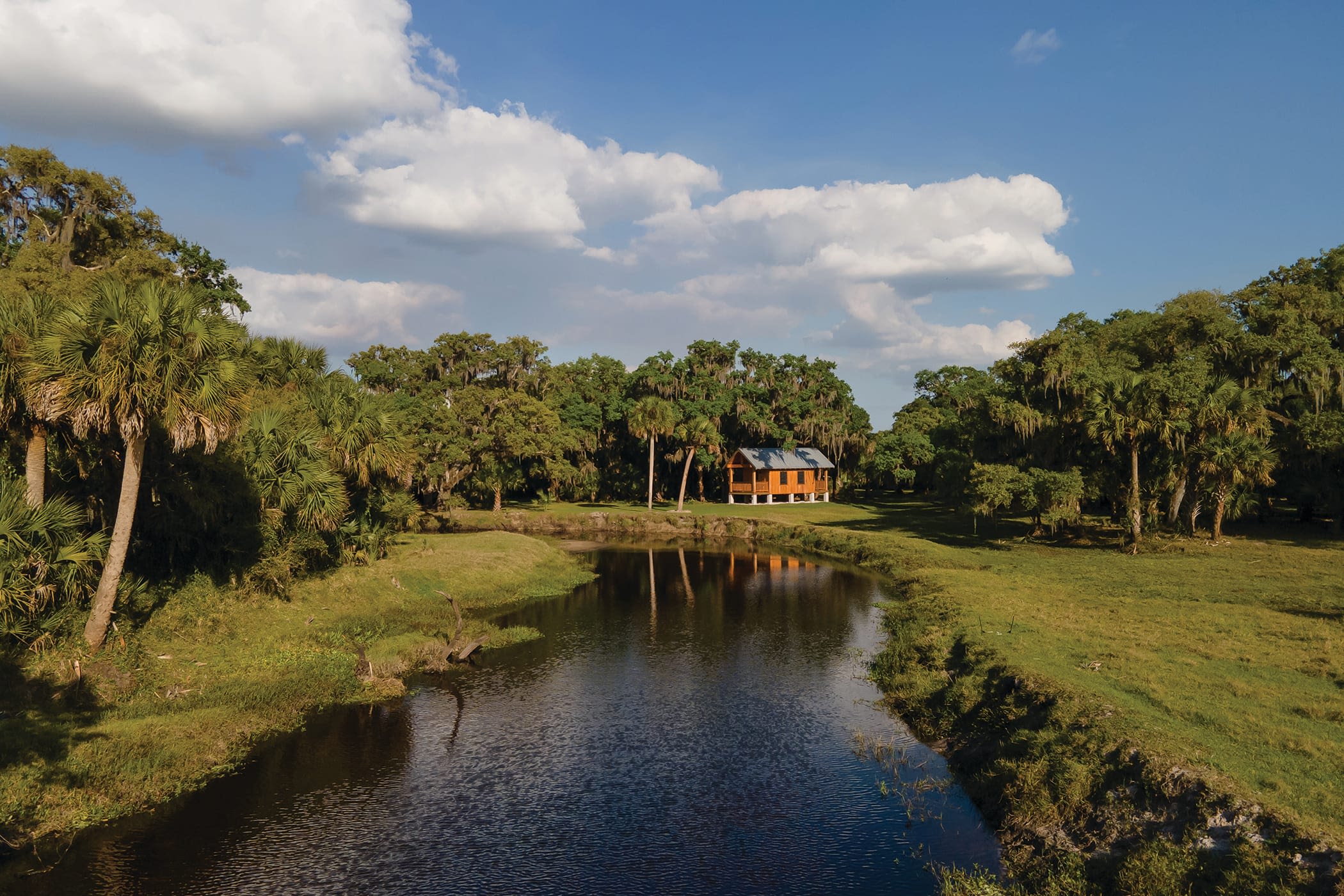
Triangle Ranch is a 1,200-acre working ranch abutting the Myakka River, with cattle and pastures dotting the property between patches of Florida forest thick with palmettos, cabbage palms, pine trees and oaks overflowing with Spanish moss. It’s a Florida you won’t find farther west, where master-planned communities and subdivisions have taken over. It’s also a far cry from Moore’s childhood terrain in New England, where she spent frosty winters traipsing through forests and summers chasing butterflies and blowing dandelions. She says Triangle Ranch is a continuation of her lifelong passion for an “outdoorsy life.”
Moore moved to the area from Massachusetts in 2007 with her then-husband, Stuart Moore, and their school-aged children. Stuart Moore co-founded the digital advertising company Sapient, which was acquired by French communications group Publicis for $3.7 billion in 2014. When Stuart and Elizabeth divorced, she set out to use her settlement to enrich the Sarasota community she had grown to love, donating to and serving on the boards of nonprofits such as Mote Marine Laboratory & Aquarium, Big Waters Land Trust, Gulf Coast Community Foundation, the Lemur Conservation Foundation, the Tree Foundation and the Climate Adaptation Center.
Owning a working ranch was not on her bucket list but, in 2016, she bought Triangle Ranch to save it from potential development. Developers were circling, and the ranch’s previous owners, Tony and Lela Carlton, were hoping to avoid the land being devoured by housing subdivisions. Moore stepped up, wrote a $3 million check, and collaborated with Big Waters Land Trust (then the Conservation Foundation of the Gulf Coast) and the Southwest Florida Water Management District (SWFWMD) to save the land.
But owning a ranch hasn’t been easy. McKendree points out different landmarks, recalling how the land changed during both the 2022 storm season, with Hurricane Ian, and 2024’s season, which brought hurricanes Debby, Helene and Milton. Ian brought the most unprecedented flooding Moore and McKendree had ever seen, with most of the ranch underwater for weeks.
Some of McKendree’s stories could be mistaken for tall tales. “After Hurricane Ian, the water came up so high that I came across a huge manatee in what is usually just a ditch. I thought I’d found Shamu,” he recalls in his mild Florida country accent. “I called the [Florida Wildlife Commission] to report it, but the gal on the phone said, ‘I appreciate your concern, sir, but I'm gonna be truthful with you. That manatee didn't get that big for being stupid. It’ll find its way out.’ I guess she told me!”
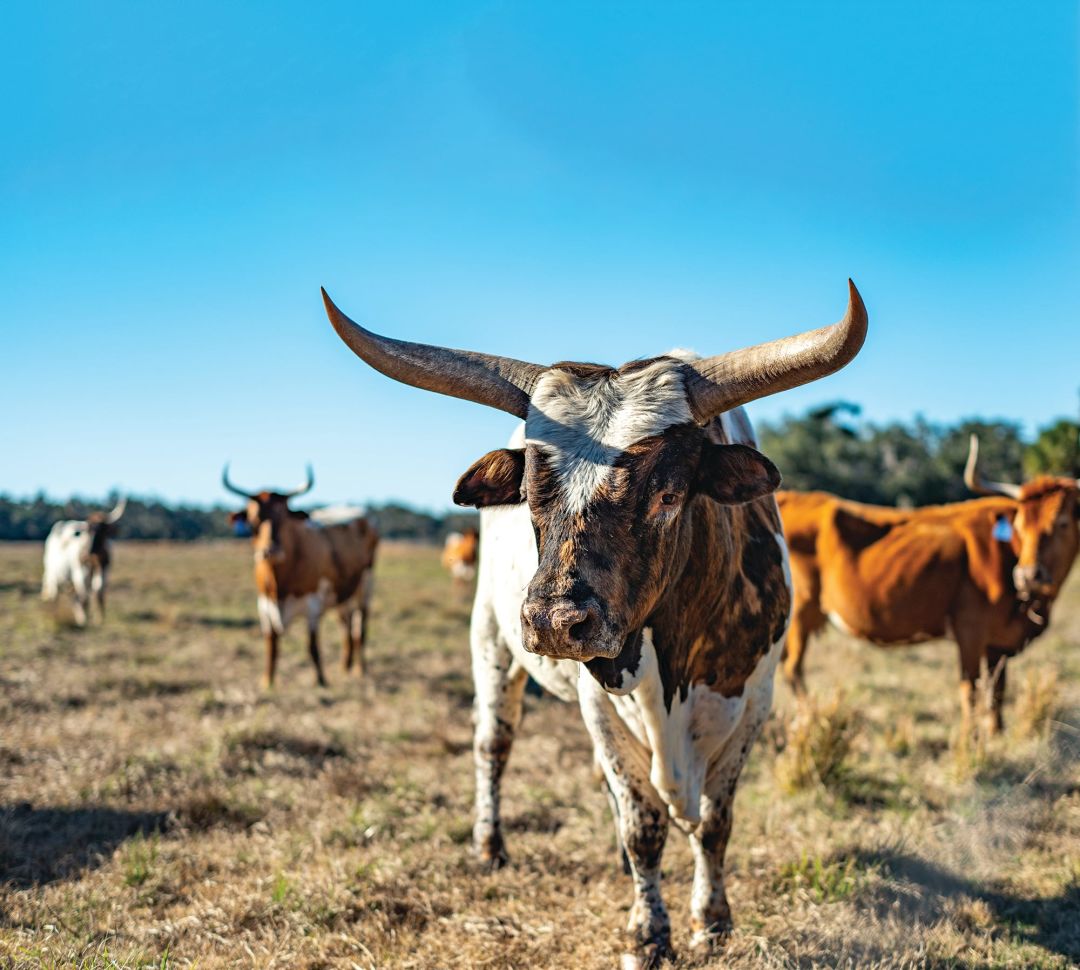
Image: Nicole Moriarity
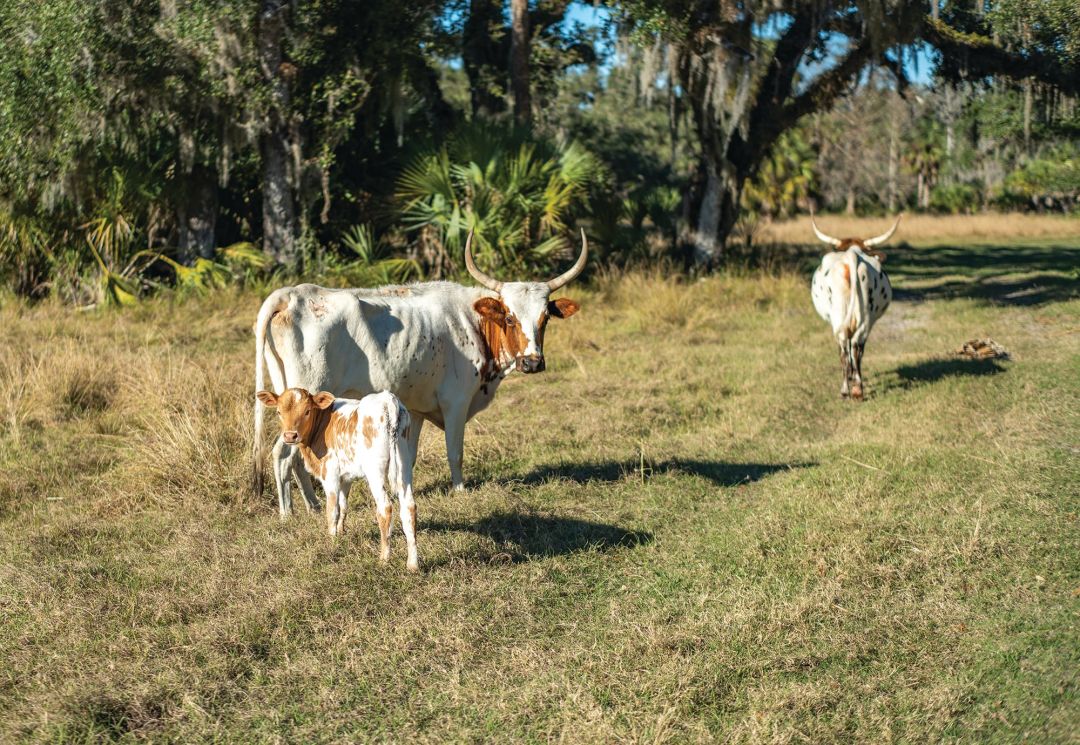
Image: Nicole Moriarity
“Jason, stop the cart!” Moore says. She wants to show off her Florida Cracker cows.
Inside a thin wire fence, a herd of Cracker cattle with long horns comes galloping to greet Moore. The cows are lean, an adaptation to Florida’s harsh environment. The breed has a history that dates back to 1565, when Spanish explorers brought cattle to the peninsula. But by the 1970s, these smaller, free-range cattle had nearly disappeared as larger breeds and fencing were introduced. Conservation efforts have increased their numbers from 1,300 head in 2010 to between 2,500 and 5,000 head in 2022, but the breed is still designated “threatened” by The Livestock Conservancy.
On Triangle Ranch, Cracker cattle are primarily decorative and for Moore’s enjoyment and passion for Florida history. “Ranchers don’t want cattle with long horns, and Jason says they don’t make any money, but I don’t care,” she says. “I love them.”
Moore hops back in the side-by-side, and after another 15-minute jaunt through ditches and over earthen bridges, Triangle Ranch’s pastures and scrub open to a 10-acre plot with three small pecky cyprus cabins, a chickee hut and a two-bedroom 1936 Cracker cottage home Moore saved and transported to the ranch from Siesta Key. Each cabin is available to rent on both the Airbnb platform and through the ranch’s website for between $200-$400 a night.
Moore credits her inspiration to introduce travelers to Old Florida to the 1984 Patrick Smith novel A Land Remembered. It’s a sweeping tale of early Florida Cracker life, beginning in the mid-19th century and tracing the impact of land exploitation over the next 100 years. It was published by Sarasota’s own Pineapple Press. Moore has placed a copy of the book in each cabin, hoping her guests will fall in love with it like she did and carry its philosophy of conservation with them when they leave.
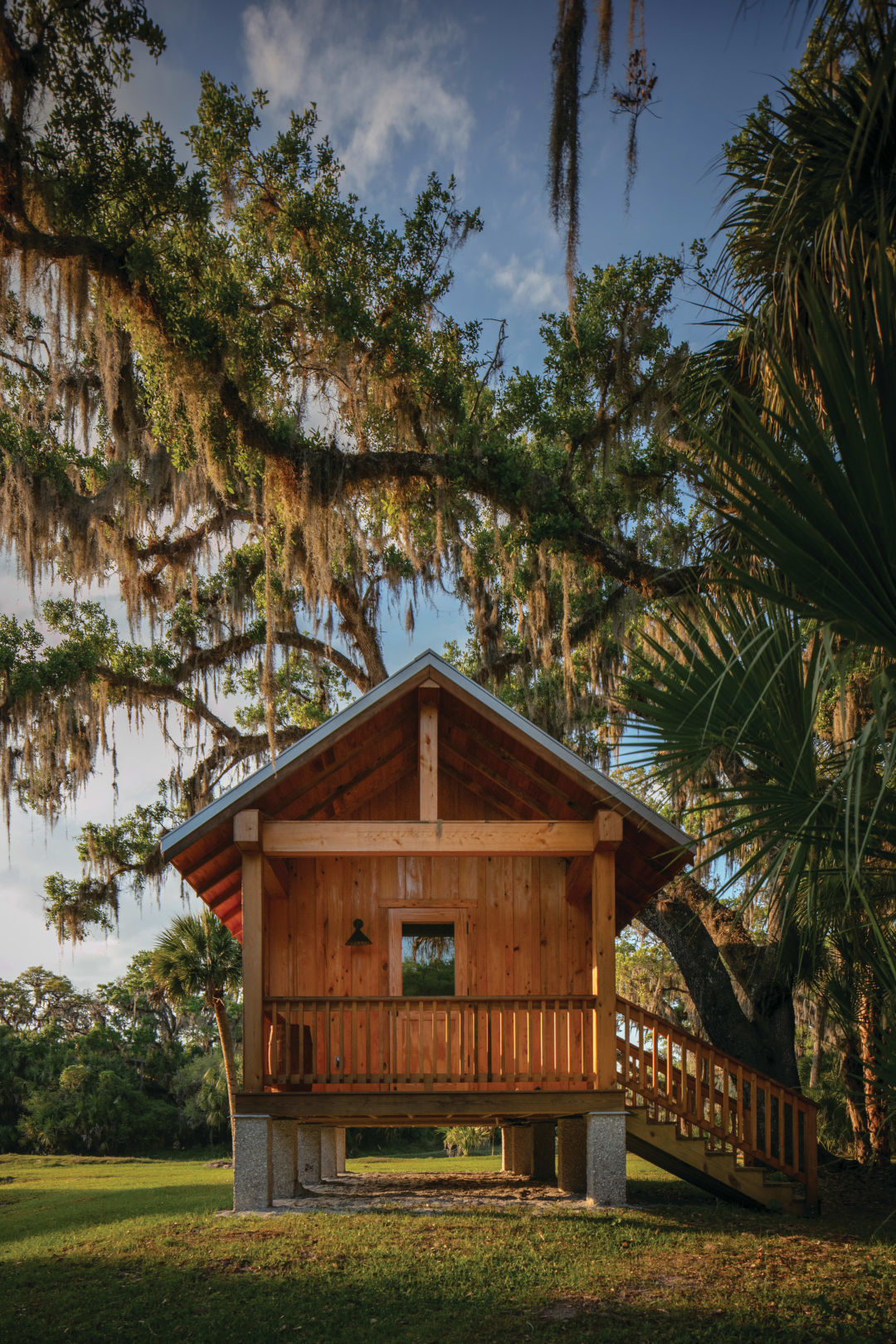
Image: Ryan Gamma
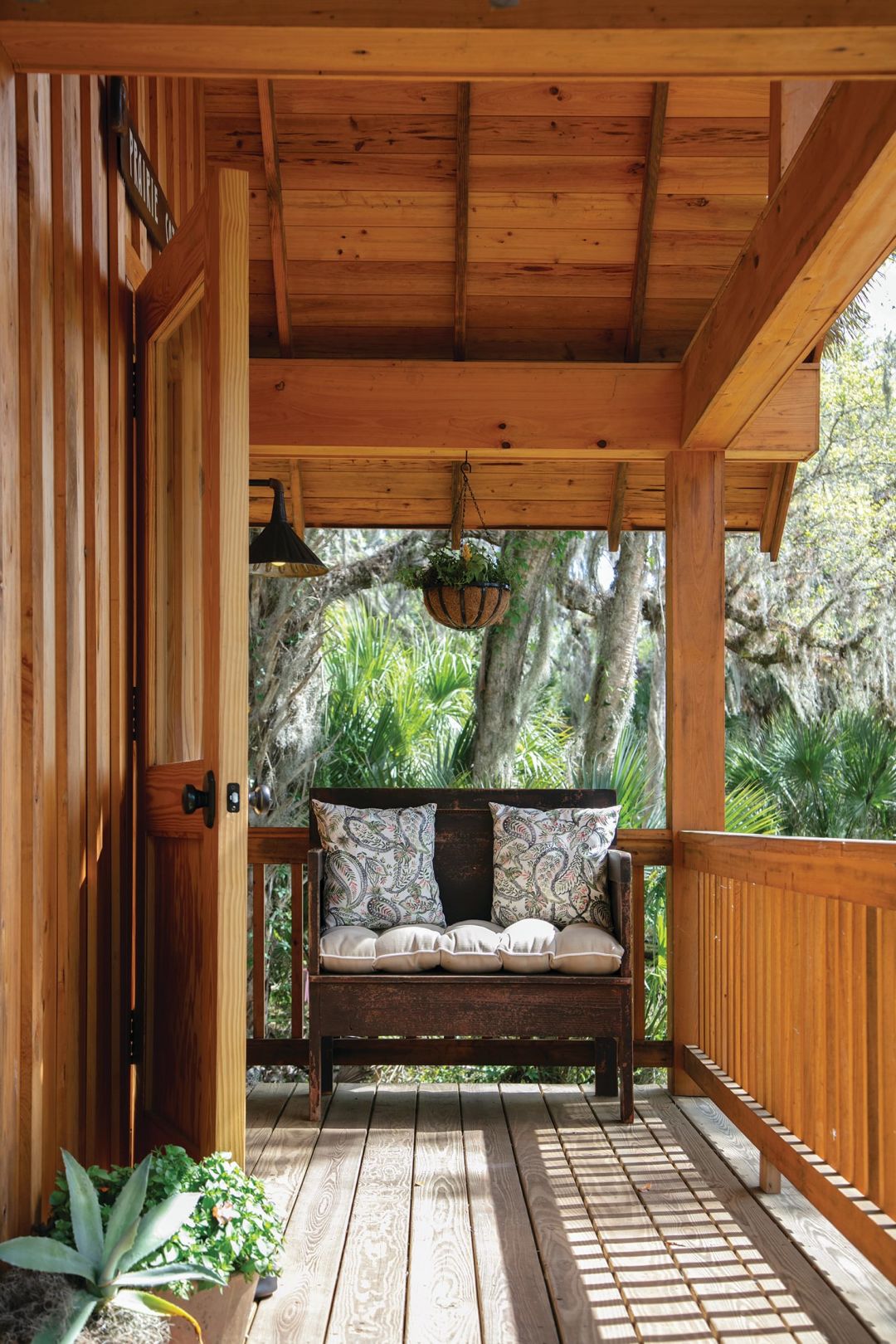
Image: Ryan Gamma
The three smaller cabins—two for sleep and one for cooking and showers—are inspired by historic Cracker cottages, but have been modernized for comfort. Moore collaborated with Jerry Sparkman of Sweet Sparkman Architecture to design them. “In A Land Remembered, and all my other readings, I learned the Cracker cowboys would have one room and a porch, and they'd mount their tools and hunting weapons on the outside of the house,” she explains. “It was basically a little camp with a campfire outside and a hitch for their horse.”
Each of Moore’s Cracker cabins is elevated on tabby (concrete mixed with shells) stilts to protect them in case the Myakka River crests. And Moore has added a few conveniences: a coffee maker, dehumidifier and air conditioning. The rest is vintage furniture she and a friend sourced from antique stores in Central Florida to reflect what might have been inside a classic Cracker home.
“We did a lot of shopping in Arcadia. [My friend] even decoupaged some of the furniture,” Moore adds, pointing out an antique bedside dresser. “We grabbed some funky things, so we've taken it a little beyond the simplicity of an old Cracker cottage, for both nostalgia and comfort.”
Moore also hung original Florida Highwaymen paintings in each cabin and the main cottage. The Highwaymen were a group of 26 self-taught Black artists who defined a distinctly Floridian art movement in the 1950s. They primarily worked along the East Coast of the state, but focused on capturing Florida’s interior beauty, like sunsets over scrublands, lush green pine and oak hammocks, and wild swamps. The Highwaymen's nickname comes from the artists selling paintings door to door, along highways and out of car trunks, bypassing galleries that were segregated at the time. Once affordable, Highwaymen paintings are now highly sought after by collectors and sell for thousands of dollars. “Every time I pass a wall, I think, ‘Oh, I could probably put a painting right there,’” Moore says.
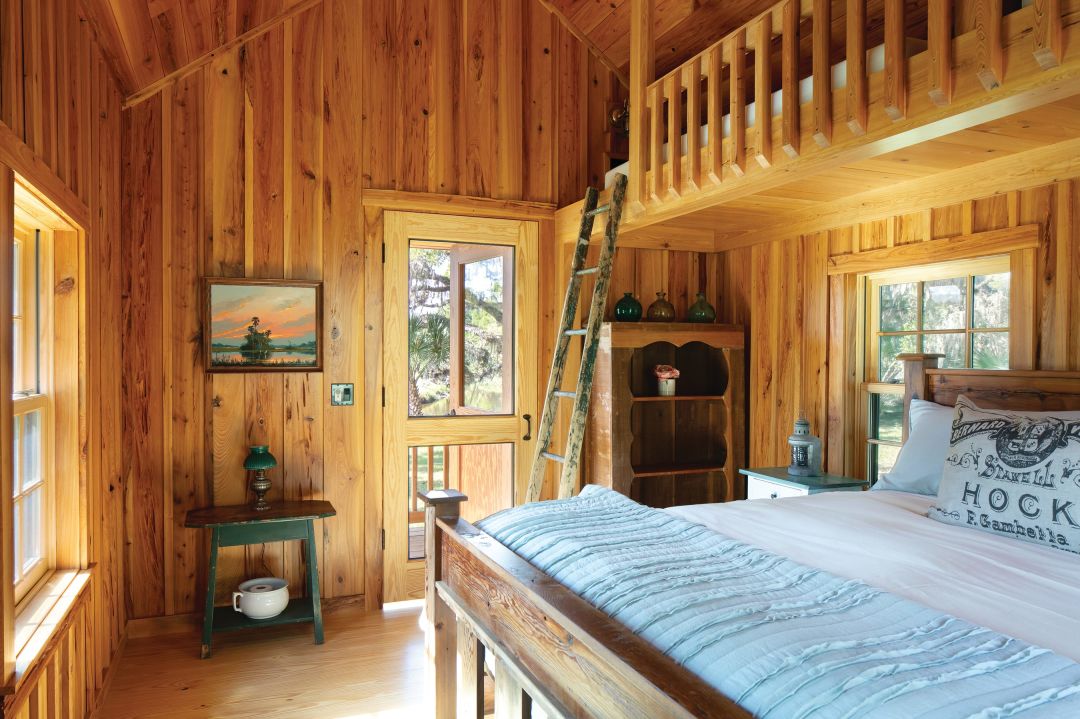
Image: Ryan Gamma
The first cabin, called the River Cabin, is closest to the Myakka River, which snakes around 10 acres of the property. Inside the one-room, 200-square-foot building, visitors immediately detect the fragrance of pecky cypress. The tiny room has just enough space for a plush, king-sized mattress—definitely not what Florida Crackers were sleeping in; above, a small loft with two twin beds is accessible by a utility step ladder.
“This is where a family might stay. The kids can go up into the loft, and Mom and Dad sleep below,” Moore says.
The second Cracker cottage, Prairie Cabin, sleeps two with a queen bed, and it’s Moore’s favorite cottage to crash in when she wants to escape her other Sarasota home, a Palm Avenue penthouse. “It's like your own playhouse—something you might have wanted as an escape when you were little,” she says. “And, of course, it's just a hop and a skip over to the kitchen and the showers. This is my special place when I like to read and just be.”
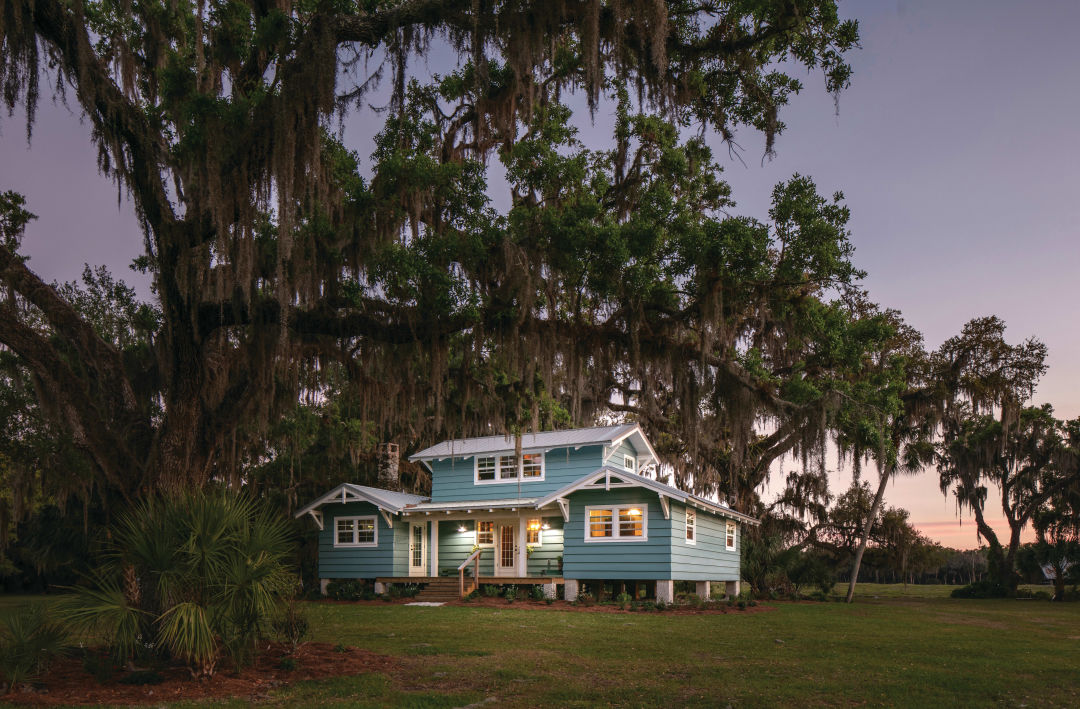
Image: Ryan Gamma
Before visiting the final sleeping quarters, a generous homestead for four guests called Little Siesta, there’s a stop at the Cracker Cantina. It’s another classic cabin with pecky cypress and a tin roof, but it’s not for sleeping. Instead, it has several separate rooms to gather for meals, take showers and relax outside.
“We didn’t want our guests to be required to cook on a campfire like the old Cracker cowboys,” Moore says. “So we built this to make sure they’re comfortable. There’s a range, refrigerator, microwave and—my favorite—a stocked wine fridge that guests can pull beautiful wines from. When the property is fully booked with different guests, the kitchen, and especially the wine, are great for everyone staying here to meet one another and make new friends.”
There’s also a generous porch, and, perhaps most importantly, bathrooms with showers. The bathrooms are not directly connected to the sleeping cottages, but they’re a short walk away and have Toto toilets, luxury toiletries, and an outdoor shower that is fully enclosed and spacious. Moore figures the type of guest who is interested in staying at Triangle Ranch would be tickled to shower outside. “I like to think of it as a little curated museum designed for modern hospitality,” she says.
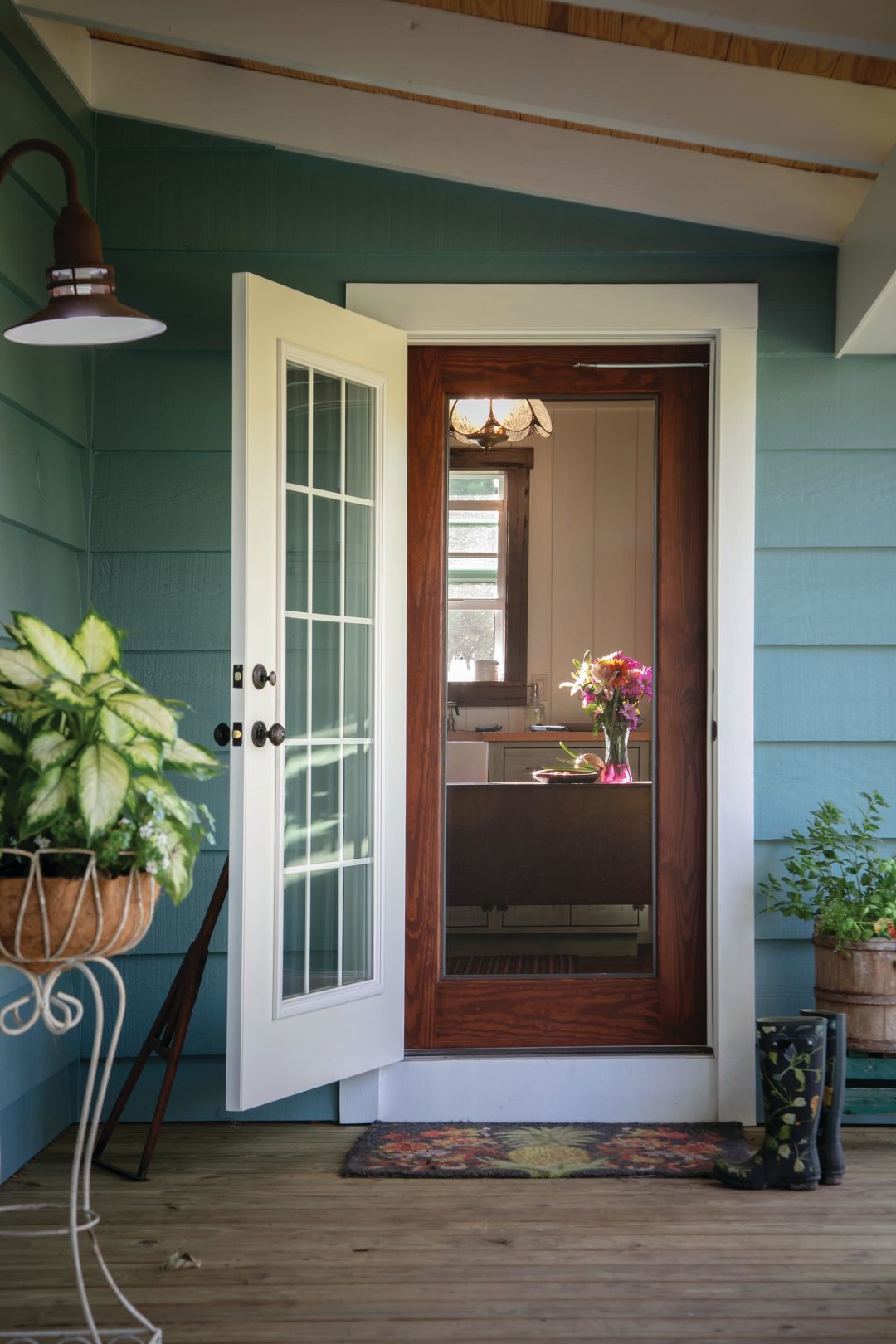
Image: Ryan Gamma
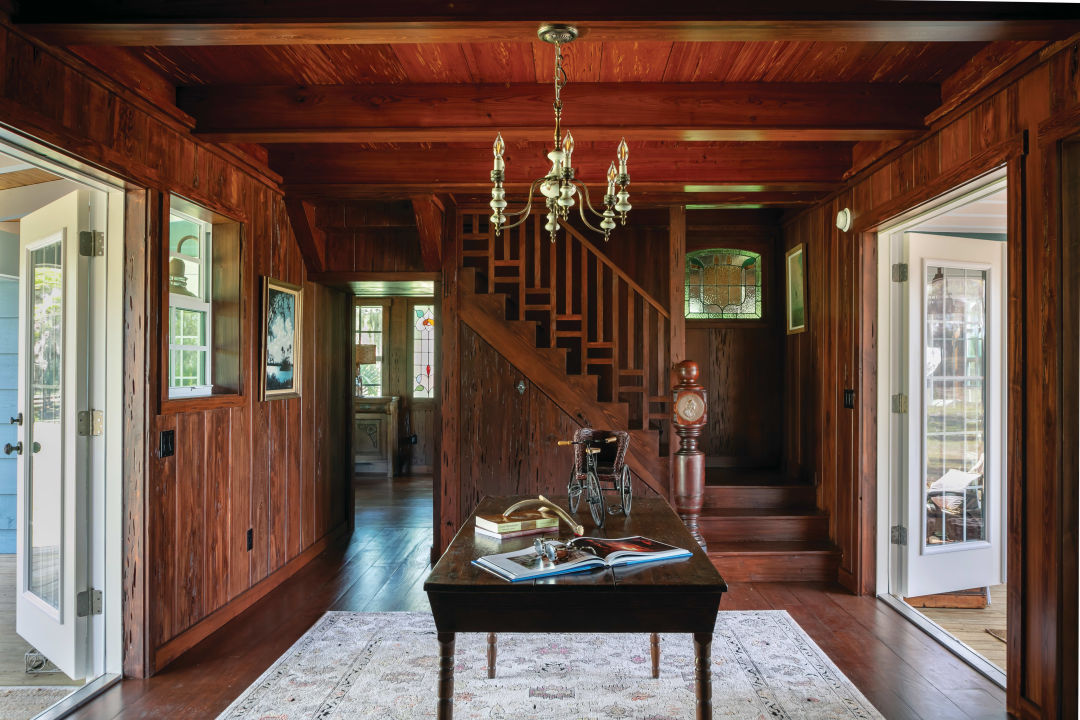
Image: Ryan Gamma
The property’s pièce de résistance, Little Siesta, is her greatest pride. At 1,200 square feet, and about $400 per night to rent, it has its own kitchen and bath, two bedrooms (one with a king bed, the other with a queen), a kitchen and a game parlor. Moore saved Little Siesta from demolition on Siesta Key and had it painstakingly moved to the ranch in three pieces. It’s also made from pecky cypress and decorated with period furniture with a few Sarasota-specific flourishes, like a floor-to-ceiling mirror from the Ringling Brothers circus train in the primary suite. “This actually came with the house,” she says. “There are only five of them, so we were particularly careful moving it.”
The primary bathroom upstairs has a luxurious copper tub and an adjoining balcony with a new pecky cypress railing. In the center of each section of white-painted railing are carved cutouts of different native Florida birds, such as a heron, spoonbill, ibis and woodpecker. Downstairs, the full kitchen has a high-tech cappuccino machine, custom cabinetry and a vintage refrigerator. It’s the ideal mix of old and new, and while the range looks like an old wood-burning stove, it’s a replica outfitted with electricity. “I originally wanted an old one from the 1920s, but Jason pointed out they can be quirky, and if someone didn’t use it just right, it could burn this whole wooden house to the ground,” Moore says.
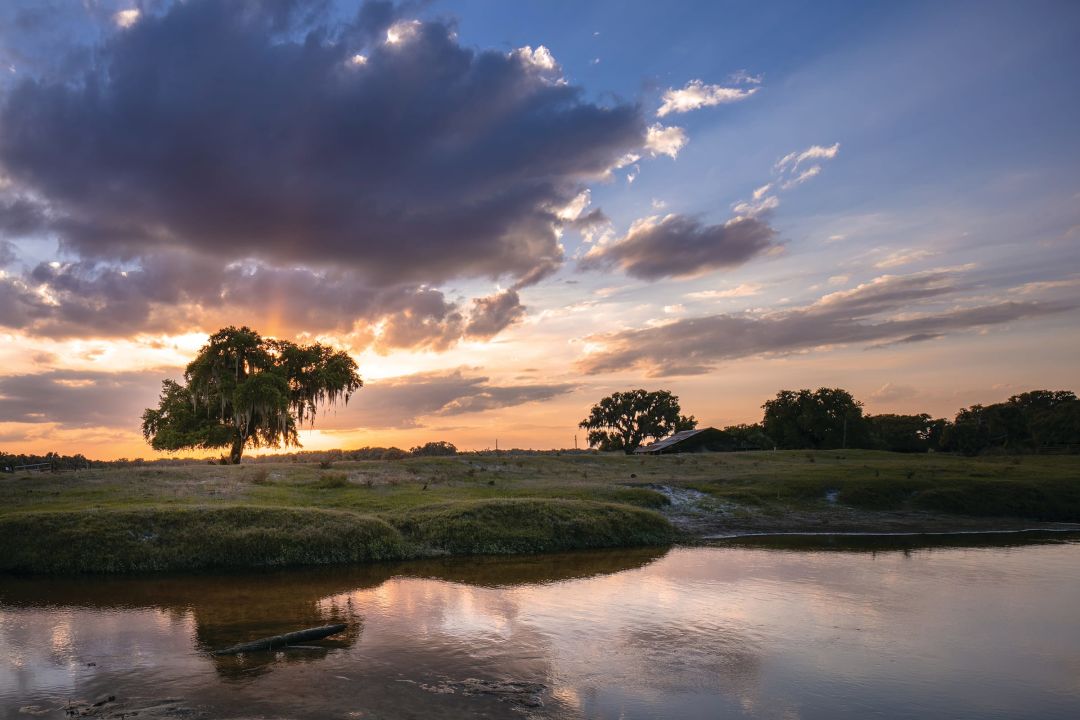
Image: Ryan Gamma
Throughout the visit to Triangle Ranch, Moore emphasizes the rentals’ hospitable atmosphere. She mentions bookings for family reunions, environmental clubs and corporate retreats, along with weekends where each cabin was occupied by strangers who became friends by the end of the weekend. While the original Cracker cabins were intended for utility, in an era where homesteaders spent the majority of their day outside tending to and fighting to survive the wild landscape, using their cabins primarily for sleep, the cottages at the ranch are meant as an opportunity to relax, unwind and reconnect with one of the rare pockets of undeveloped Florida.
“Because of A Land Remembered, all this came together to welcome people to experience Old Florida,” Moore says.
TRIANGLE RANCH | 30303 Clay Gully Road, Myakka City, (941) 315-7064, thetriangleranch.com