


Norbert Putnam Produced Six Jimmy Buffett Albums. Catch Him in a Sarasota Film Festival Documentary Next Week.
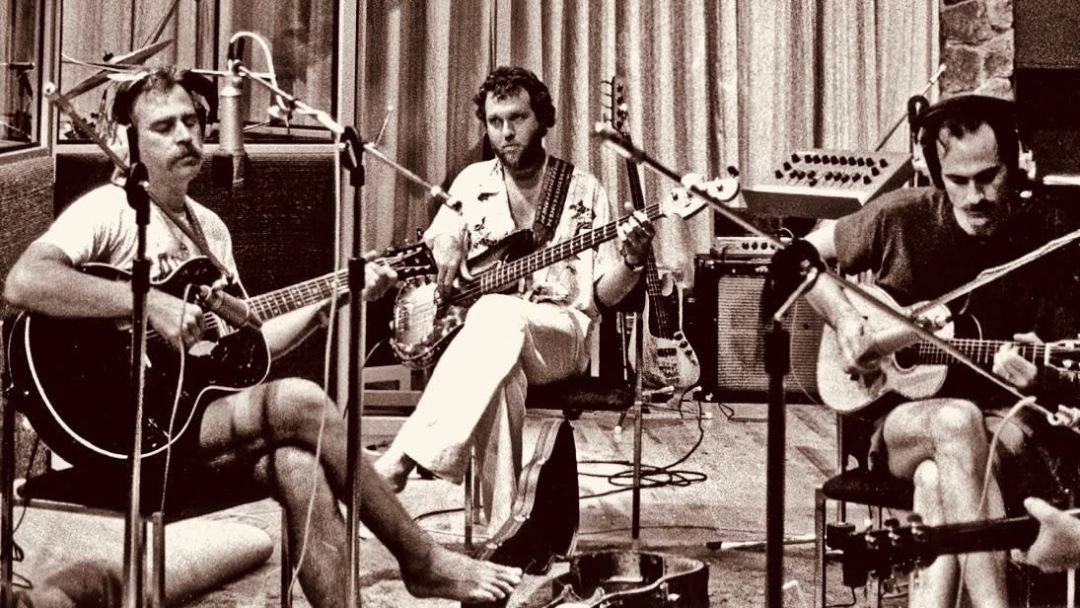
Image: Courtesy Photo
The 2026 Sarasota Film Festival kicks off Friday, April 10, and one of its documentaries comes with a Jimmy Buffett soundtrack. Occupational Hazard: The Original Coral Reefers is screening Tuesday, April 14, at 6:30 p.m. at New College of Florida’s Sainer Pavilion. The film traces the origins and evolution of Jimmy Buffett’s original Coral Reefer Band during the 1970s and early 1980s. The documentary is narrated by Academy Award winner Jeff Bridges.
"I first saw Jimmy and the Coral Reefers in 1977, then moved to Key West shortly thereafter,” says the film’s director, John H. Cunningham. "Having known many of the [original] Reefers for several years, I felt the band's origin story needed to be preserved. Once we started the interviews [and I heard] their collective sentiments about life in the '70s, their time on the road, in the studio and about Jimmy, I knew we had captured lightning in a bottle. My goal in making the film was to help preserve the band's origin story, capture the essence of that era, and pay tribute to how Key West had permeated their souls.”
The film includes commentary from many members of the original Coral Reefer Band along with music producer Norbert Putnam, who produced six Buffett albums, including "Changes in Latitudes, Changes in Attitudes," the album that helped launch Buffett into a new stratosphere with the hit song “Margaritaville.” Putnam also worked with artists including Joan Baez, Buffy St. Marie, Roy Orbison, Dan Fogelberg, Linda Ronstadt, the Nitty Gritty Dirt Band, and Elvis Presley; he was inducted into the Musicians Hall of Fame in 2019. Putnam spoke with us about his years working with Buffett. This interview has been edited for length and clarity.
How did you meet Jimmy Buffett?
"Jimmy was in Nashville at the time and was working with a record company that was treating his music with a standard Top 20 formula. He went to his producer at the time and said, ‘I don't want to work with those old Nashville musicians. I want to use my young band.’
"Of course, his producer was an old Nashville musician who told Jimmy that he just didn’t understand playing for people [and that] playing for microphones, with no audience, is a different kind of deal. So Jimmy came to see me, to see if I would work with this band. I had the same problem the other producer had. I agreed with that producer.
"But I asked Jimmy if he was playing [in Nashville] anytime soon. He said, ‘Oh, I'm playing here next Saturday night at Hermitage Landing out at Percy Creek.’ So I agreed to go listen and give him an honest evaluation if I thought I could make a record with his guys. Let me tell you, they were energetic, they were jumping around, and it was more rock 'n' roll than it was folk music. I got it."
You’ve been credited with helping Buffett develop his signature island sound. How did you go about that?
"Jimmy and I got together the day after that Hermitage Landing show, and I said, ‘Play me some more songs.’ They were all about sailing, drinking and partying, like the island life. And I'm thinking, what if I could associate him with the Caribbean somehow? I asked him what he thought of using a wooden flute, steel drums, marimbas, and Jimmy said, ‘Man, I don’t know about that. I’ll call you.’ And he left. I figured I’d blown my chances and that I’d never hear from him again.
"Two weeks later, my phone rang. Jimmy said he’d been thinking about it and that my idea might work. So I became his producer, and we leaned into that island sound."

Image: Courtesy Photo
What was it like while recording the first album you produced for him, "Changes in Latitudes, Changes in Attitudes"?
"Because I wanted to associate Jimmy with the ocean and the Caribbean, I figured what better place for inspiration than Miami. We took 40 people down to Miami. I rented a big house on the bay where Eric Clapton and the Bee Gees had stayed. Jimmy had rehearsed his band, and I was amazed at how great they played in the studio.
"Most producers work around the clock, and I used to be that way, too, but by the time I started working with Jimmy, I insisted on only working from 11 a.m. to 5 p.m. Jimmy couldn’t believe my hours until I told him long hours were the reason I’d gotten divorced from my first wife. I worked hard in those days, and if Elvis was in town to record, forget it. When she told me she was leaving, I told her I couldn’t disagree.
"Jimmy and I would have breakfast together every morning and dinner every night to talk about what we had accomplished in the studio. While we were there, Jimmy bought a boat, and we’d get a six-pack of beer, crank the diesel, pull the boat out, get her into the wind, tie her off and crank the stereo. That’s the sound of that album, and those days on the boat helped us get there."
Were you with Buffett while he developed his most famous song "Margaritaville"?
"He came up one day and said, ‘I’ve got a song, but I'm still working on it. It's about a gig I played one night down in Key West. I'd been fishing after the show, and I came back to this bar I'd hang out in, and I'm in my fishing trunks and flip flops, and I'm drinking, and then I'm walking home, and I stepped on a beer can and I cut my toe.’
"I'm thinking, ‘Well, go on, right?’
"He said, ‘The next morning I get up, I'm hungover, I'm gonna make a margarita, but I can't find all the ingredients. But I do have some shrimp boiling, and I'm trying to write a song like always. I’m going to call it 'Margaritaville.'
"I hated the name of it immediately. There’s Nashville, there was a Motown studio in Detroit called Hitsville and there was a Henry Mancini song called "Dreamsville." Everything was a ‘ville.’ But then he started singing it: ‘I'm wasting away in Margaritaville, searching for my lost shaker of salt. Some people claim there's a woman to blame, but I know it's my own damn fault.’ God, I wanted to give him a hug."
What was your favorite Buffett album to produce?
"I produced six. But I’d say that first one, "Changes in Latitudes, Changes in Attitudes," and the second one, "Son of a Son of a Sailor," with 'Cheeseburger in Paradise.' That was such a fun one."
Local legend has it that Buffett was inspired to write "Cheeseburger in Paradise" after a great meal at the Cabbage Key Inn near Charlotte Harbor in Southwest Florida. Can you confirm or deny?
"I know that song took him a long time to write, and he was worried he wouldn’t have it finished in time for us to record it. I think he worked on it for a while, but I can't say he didn't start it there, at that little place. I don’t actually know. It would be a good story, though."
Occupational Hazard: The Original Coral Reefers will show at the Sarasota Film Festival on Tuesday, April 14, at 6:30 p.m. at the New College of Florida Sainer Pavilion at 5313 Bay Shore Road.