


Renny Harlin and Gene Simmons Bring Their Action Flick 'Deep Water' to the Sarasota Film Festival
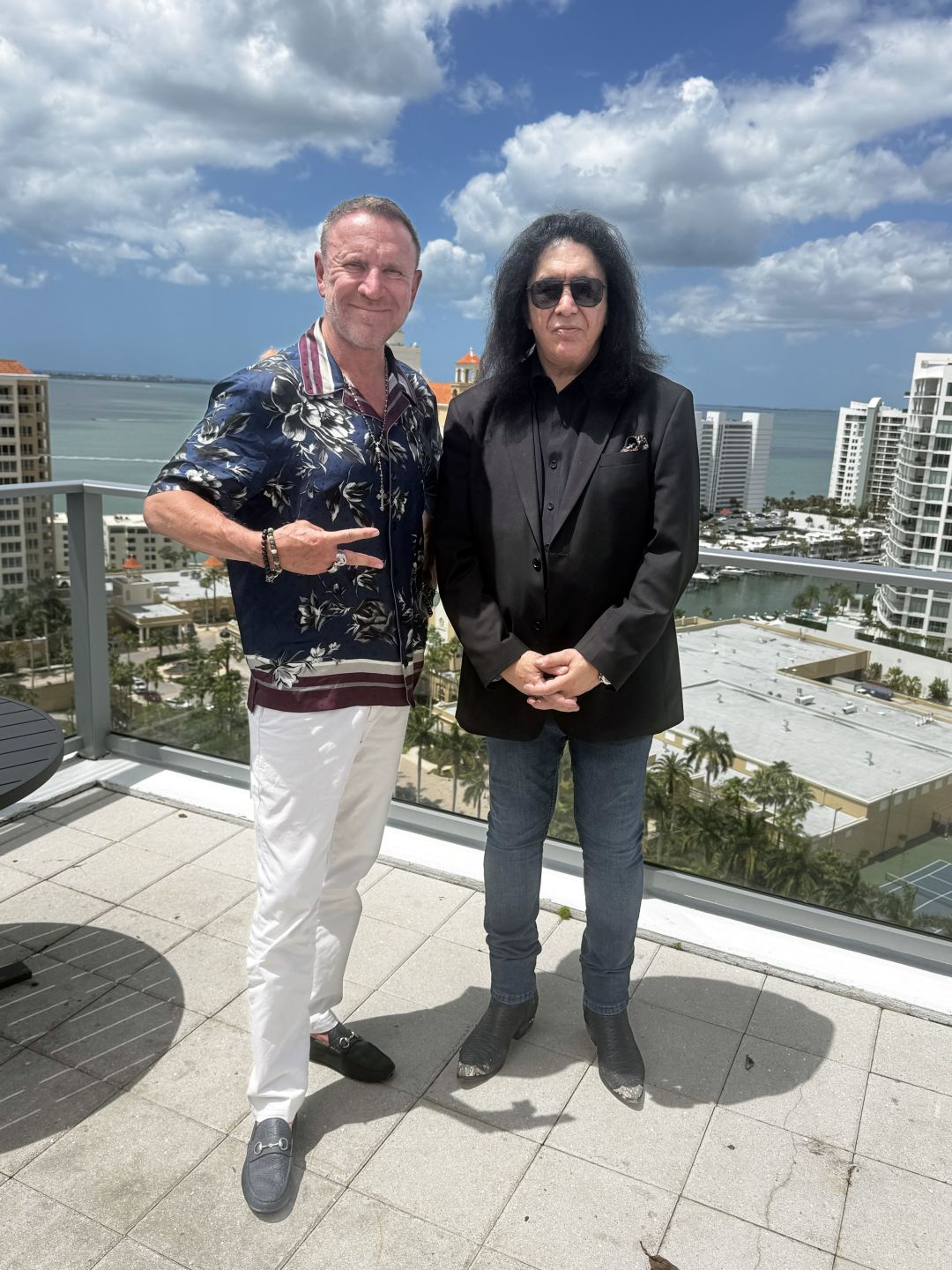
Image: Nicole Moriarity
I met legendary film director Renny Harlin and Gene Simmons—yes, that Gene Simmons, borderline mythological bassist and co-founder of Kiss—on a breezy afternoon atop The Westin ahead of opening night at the Sarasota Film Festival, where their film Deep Water was set to premiere.
The last time Simmons was in town was exactly 20 years ago to attend the festival, when he told a reporter he’d be “giving lap dances by request,” a promise he has yet to make good on. This time around, Simmons is disarmingly earnest, particularly when it comes to Harlin, whom he calls an old friend and with whom he announced his professional partnership in May 2023 at the Cannes market. “If he ran for government,” Simmons says, “I’d vote for the guy.”
Harlin is the most successful Finnish film director in history, with Die Hard 2, Nightmare on Elm Street 4: The Dream Master and Deep Blue Sea under his belt, to name a few. He left his home at 23 for Hollywood with no prospects, and by 34, he was directing the likes of Sylvester Stallone and Bruce Willis. For all his accomplishments, what Harlin returns to again and again is belief. Who had it in him, and when.
“In 1993, I made a movie called Cliffhanger,” he says. “Nobody really knew anything about it, but we were the opener for the Cannes Film Festival. I took my mother as my date. She was the only one who had ever really believed in me.”
He chose to study film in Finland, which felt, in his words, “ridiculous,” given the absence of an industry. He dropped out of university—“It was B.S.”—and declared he was moving to Hollywood. For a while, it went about as well as one might expect. He ran out of money, lived in a garage. Things “were hopeless,” he says bluntly. But in the end, the gamble paid off.
“When we walked out of the theater after that premiere, after a standing ovation by a thousand tuxedo-clad people, the music from the film was playing, there was fake snow in the air," he says. "I had my mom next to me. On the other side was Elizabeth Taylor, and next to her was Sylvester Stallone. Stallone leaned over my mother to me and said, ‘Remember this moment. It’ll never get better than this.”
Harlin pauses, bringing his hand to his face. His eyes are glossy with tears.
“Now we’re in Sarasota, and we’re at the opening night here," he continues. "And it means just as much to me because now, it’s over 30 years later, and here I am. My mom’s not around anymore, but I have her." He gestures to his wife and the film's co-producer, Johanna, seated beside him, radiant, a mere week away from giving birth. “She’s expecting our child, and I’m still able to do this. Now, with a great producer like Gene, people will come see this in the way it’s supposed to be seen.”
When I ask why they chose Sarasota for the premiere over somewhere like Miami, Harlin doesn’t hesitate.
“Miami is fantastic. It’s flashy, it’s amazing,” he says. “But Sarasota is a very special city. It feels like a place where people really appreciate cinema and the arts. It’s an extremely high-culture place. And, it’s a waterfront town." He nods towards the bay. “It feels like the right place to show this movie for the first time.”
From where we’re sitting, the bay gleams a soft turquoise, calm and unbothered. The water in the film is anything but. Deep Water, which stars Aaron Eckhart, Ben Kingsley and Angus Sampson, follows a group of international passengers en route to Shanghai who are forced to make an emergency landing in shark-infested waters during a commercial flight. The survivors have to navigate not only the physical wreckage, but shifting dynamics of fear, trust and survival. It’s this emotional undercurrent that resonates with Simmons.
“Besides our passion, Renny and I share being from different countries," Simmons says. "I was lucky enough to land in New York with my mother. She’s from Hungary, I’m from Israel. Couldn’t speak a word of English. But the magic of movies is that even if you don’t understand the words, a great movie tells the story visually. It was through movies that I learned to speak English.
“You know, there are scenes from movies that will stay with me as long as I’m alive," Simmons continues. "At the end of The Hunchback of Notre Dame, when the camera pulls back, you see the gothic church and the grotesque hunchback is crying, and that sl—t, the beautiful queen, goes off with the handsome prince. Why didn’t she stay with our hunchback? It just tears your heart to pieces. Movies are one art form that combines what I’ve made a living at—music—and visual art, great storytelling, wonderful visions. It’s the great and complete art.”

Image: Nicole Moriarity
Harlin utilizes that same cinematic power to tap into more visceral, unsettling territory. He pivots between the heart and the gut, well-versed in the deep-seated anxieties that drive a thriller.
“People are most afraid of what they can’t control,” he says. “If you’re going to get on the plane, there’s nothing you can do if something goes wrong. It’s a very primal situation, and we wanted to play on that fear. It’s the same way with sharks. Everyone goes swimming at one point and questions what’s lurking beneath.”
To ground that fear, Harlin points to history. “The USS Indianapolis went down in the Second World War,” he says. “Something like 1,200 sailors were in the water. In the end, there were only around 300 left, because sharks found them.”
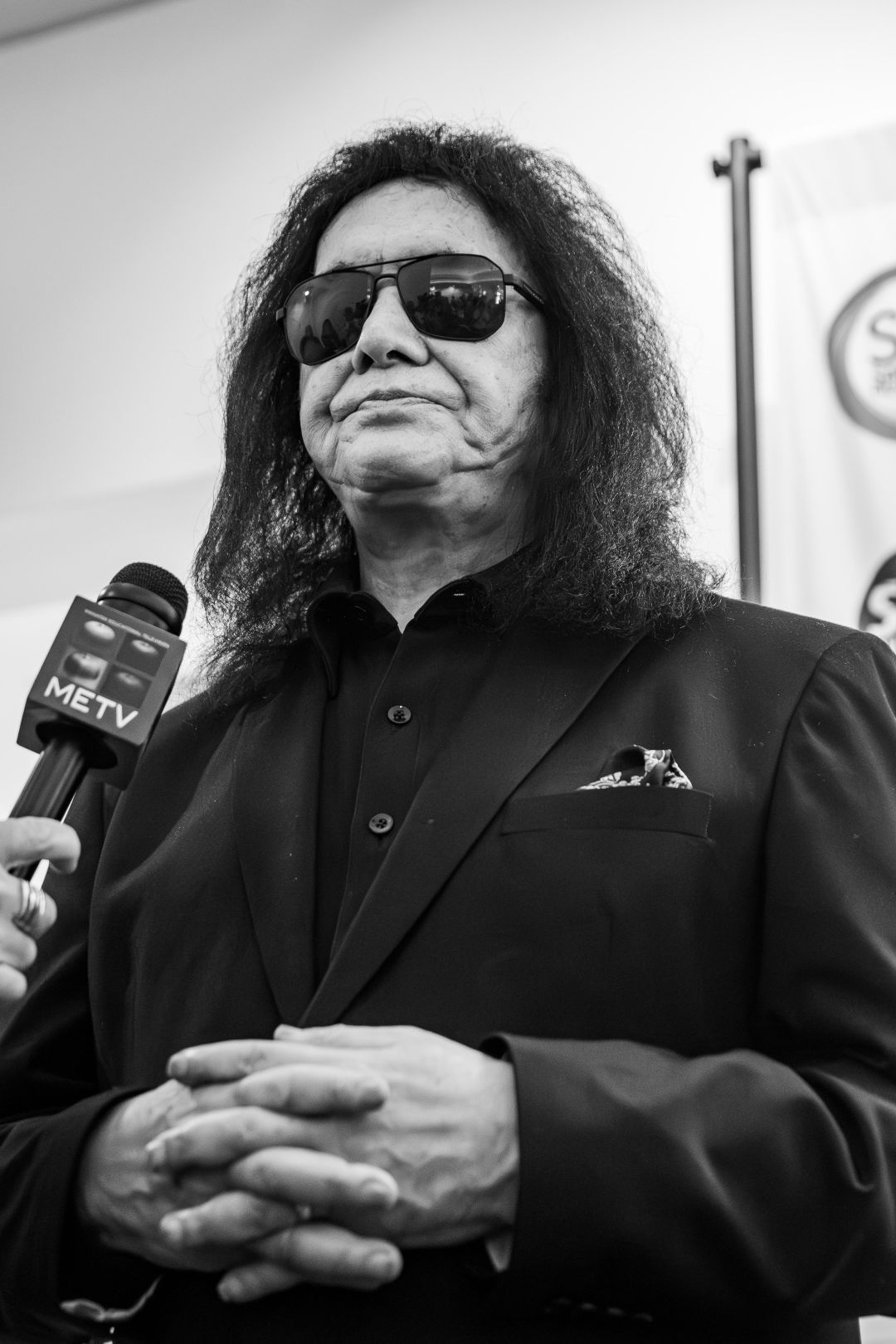
Image: Nicole Moriarity
“Imagine that,” Simmons adds, leaning in. “You’re hugging each other, you don’t want to lose each other. You try to stay in the pack. Your best friend, you push him to the edge so he becomes the meal and not you. Heartbreaking.”
For Simmons, it’s not spectacle that lingers so much as the reminder that instinct, not morality, often drives the outcome. “Sometimes there are things that are neither good nor bad, they just are,” he says. “Sharks are not evil or good. They’re just sharks.” He leans forward. “Have you heard the famous story with the scorpion and the frog? There’s a frog about to get in the water and swim across. The scorpion says, ‘Listen, bud, I can’t swim. Can I hop on your back?’ The frog says, ‘I’m not going to let you do that, you’re going to sting me.’ Scorpion says, ‘Why would I do that? Both our lives would be in danger.’ So the scorpion hops on the frog's back, gets halfway across, and then stings the frog. They both start going down. The frog says, ‘What the hell did you do? We were both going to make it!’ and the scorpion says, ‘I’m a scorpion. That’s just what I do.’”
What interests Harlin most isn’t the danger itself, but what it reveals. “It’s always interesting to see how brave men might become cowards and weaklings become heroes,” he says. “How, when you’re at the mercy of nature, friendship can be enforced—and it can tear people apart as well.”
To drive the point home, he pulls out all the stops. He’s a big believer in “practical effects,” film-speak for using real actors and props over compute-generated imagery (CGI) to achieve an authentic, true-to-life feeling. He once spent $10 million building mechanical sharks, and one of them almost killed rapper and actor LL Cool J.
In Deep Water, he built a full-scale plane tail, submerged it 30 feet underwater, and filled it with real stunt people. Divers would guide them to their seats, strap them in, and share air through a technique called body breathing. When the cameras rolled, the divers pulled away, leaving the performers alone, holding their breath in the dark submerged set. “It’s very scary,” Harlin says. “Because the responsibility, ultimately, is mine. I’m creating the story.”
Before each take, he gathers the crew. Anyone uncomfortable can step away, no questions asked. But for those who stay, there’s an understanding. “You just have to trust the technology, the diving masters, the stunt people, everybody,” he says. “We’re gonna do it, and it’s gonna be great.”

Image: Nicole Moriarity
Harlin, like Simmons, grew up having a transportive experience of cinema, and hopes the same for viewers of Deep Water. “I want them to feel the best feeling I can describe, which is when you walk out of the theater and feel like you’re a foot off the ground," he says. "The world looks, feels and sounds different. You’ve been through something that elevated you, liberated you, made you feel something, and you’re purified.”
And while the film is packed with classic ‘70s disaster movie-era excitement—I watched it, and my Fitbit thought I was doing a cardio-intensive workout for its entirety—Harlin doesn’t want that to overshadow the film’s message. “It’s about love,” he says, instinctively looking to Johanna. “It’s about what relationships and family mean to you. I’d like them to feel that that’s the most beautiful and important thing about life.”
Simmons has a democratic view of things, and says that a film is “for the people, by the people. No matter what critics say, good, bad or otherwise, the highest form of flattery is when somebody goes to see the film and the first thing they do is tell their friends they have to see it.”
Deep Water celebrates its theatrical release in 2,500 theaters on May 1. If you go, consider doing it Simmons’ way.
“To this day, if I want to see a movie, I don’t take anybody with me,” he says. “I want the theater to get really dark. I don’t want to hear someone chewing gum, or farting, or going to get popcorn. It’s that magic time that whisks you away from the now into the could-be and maybe.”


