
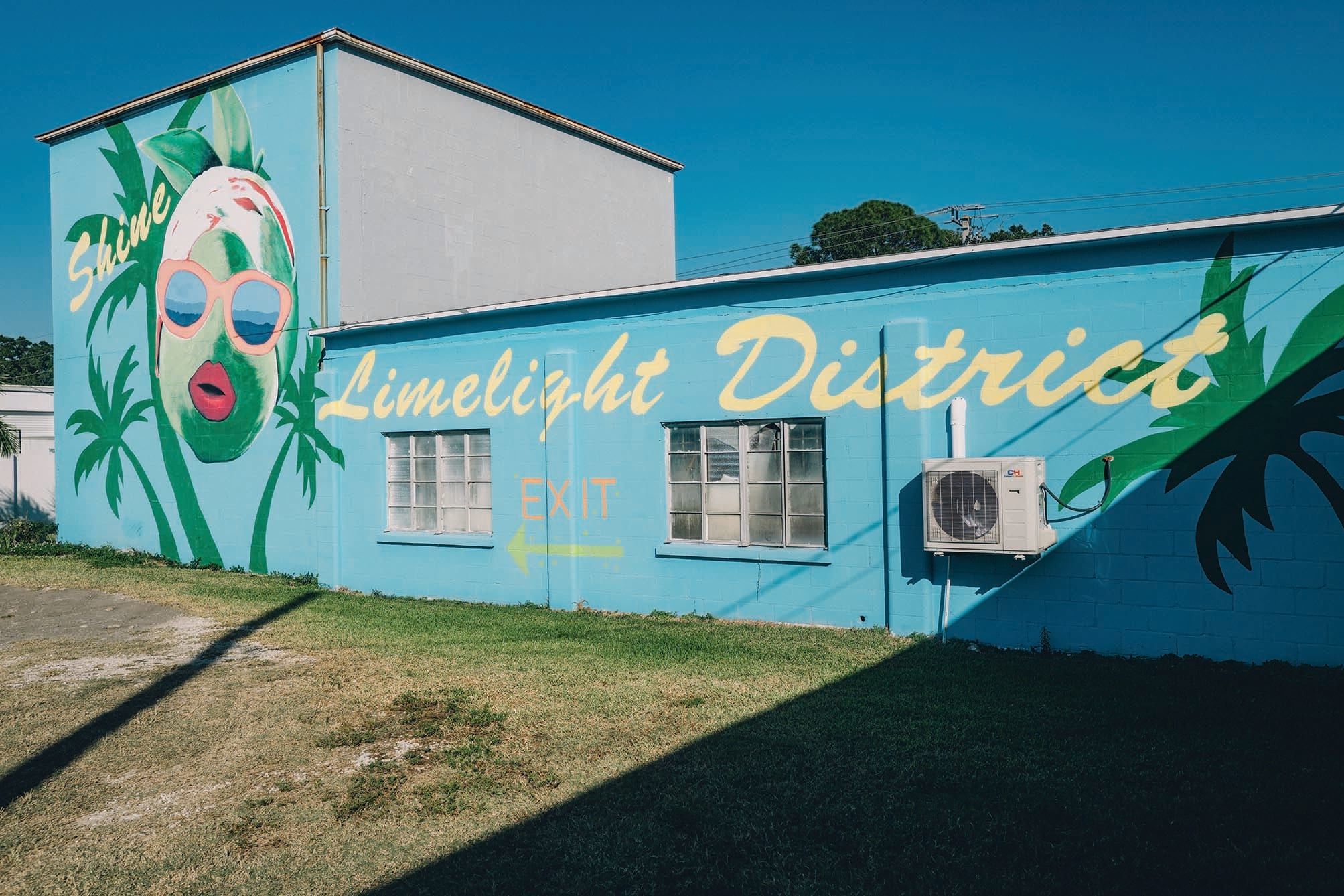




A Proposed 324-Unit Apartment Development Raises Questions in Gillespie Park
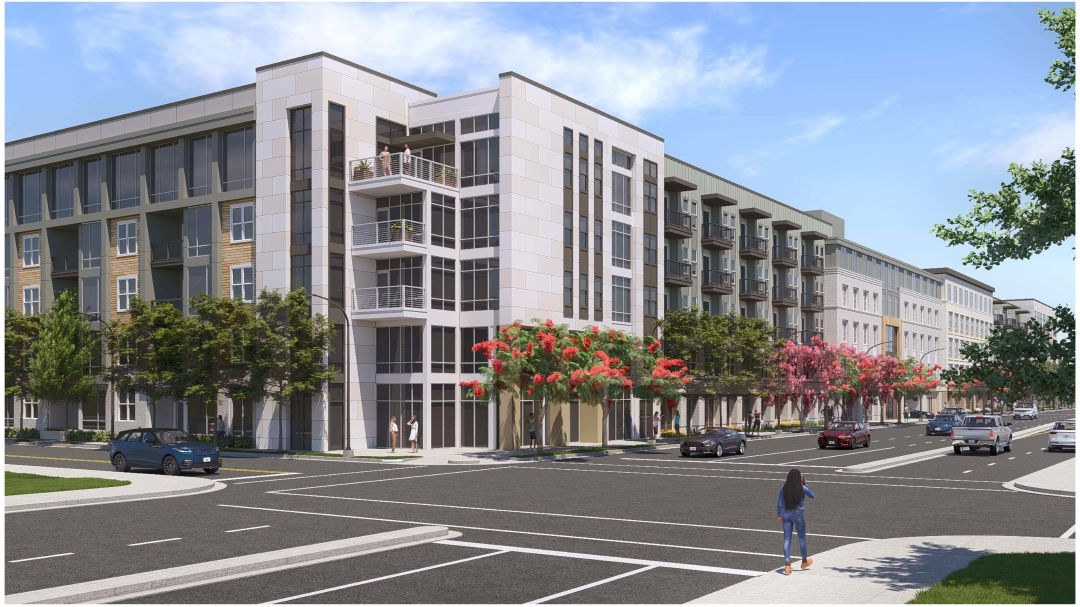
Image: Courtesy Photo
Approximately 50 people filled Fogartyville Community Media and Arts Center on Tuesday night for a Gillespie Park Neighborhood Association meeting that felt, at times, more like a reckoning. Philip DiMaria of Kimley-Horn & Associates was there to walk neighbors through a proposed apartment development. In the audience were residents, tenants and business owners from the site itself.
The proposal would bring a 324-unit multifamily development on about 3.44 acres to the neighborhood on 22 parcels with addresses on Fourth Street, Gillespie Avenue, Fruitville Road and Osprey Avenue. David Hanchrow, chief investment officer of Bristol Development Group, is listed as the contract purchaser, with DiMaria filing on behalf of the Nashville-based developer.
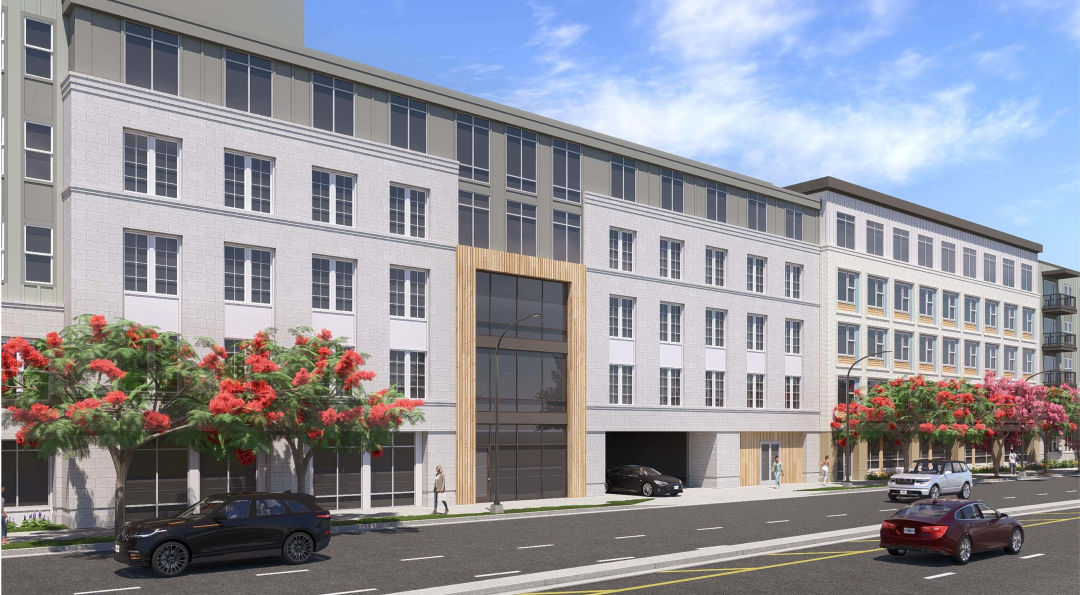
Image: Courtesy Photo
The property is zoned "downtown edge" and because no rezoning is requested and the site is within a downtown zone district, approval will not include the public process.

Image: Sarasota County Appraiser
The block itself has been assembled over time. It’s owned by Marlene and Alex Lancaster, who, based on Sarasota County property records, acquired parcels there from 1996 through 2018, paying amounts that ranged from $17,500 to $980,000 each, depending on the lot and year. The parcels vary in size, with some about twice the size of smaller ones nearby. None of the structures on the site, representatives for the developer said on Tuesday night, have been found to carry local or national historic designation despite being attributed to once hosting Ringling Circus performers and some of the colorful cottages dating back to the 1920s.
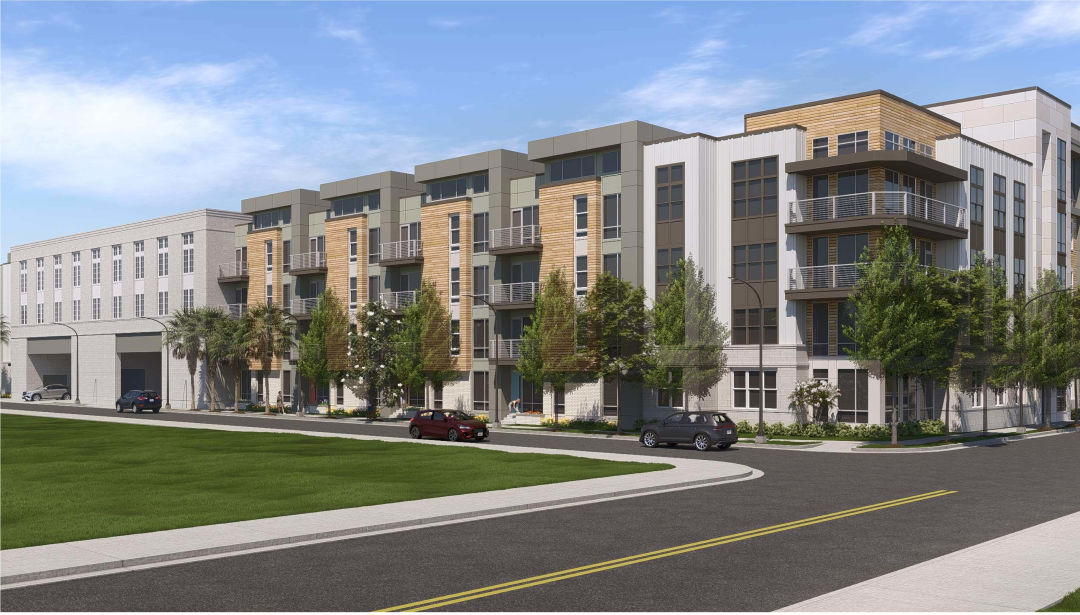
Image: Courtesy Photo
That distinction matters because many of the buildings are old enough to prompt questions about preservation—and because for the people in the room, these are workplaces, restaurants, studios and storefronts that form a small business pocket just north of downtown. Business owners in attendance included people connected to Discover Sarasota Tours, The Breakfast House, The Crystal Stargate, The Artful Giraffe, FAM, Bluebird Salon and others. A handout circulated in connection with the businesses described the property as home to 17 local businesses, 13 of them owned by women, serving more than 20,000 customers a month and more than 200,000 a year. As Wendy Goldberg of The Breakfast House put it later, “We heard [about the proposed development] on the news like everybody else.”
In addition to the 324 units, there would be approximately 433 parking spaces organized around a six-level parking structure integrated into the development. Along Fourth Street, the building would read as four stories, then step up to five stories as it approaches Fruitville Road. The plans call for amenities including a gym, clubhouse and swimming pool. Utilizing the city’s downtown attainable density bonus program, the project would include 36 attainable housing units, split evenly among households earning below 80 percent of area median income (AMI), between 80 percent and 100 percent of AMI, and between 100 percent and 120 percent of AMI.
For a four-person household, below 80 percent AMI is under $86,100; 80 percent to 100 percent AMI equals $86,100 to $107,625; and 100 percent to 120 percent AMI is $107,625 to $129,120. For a single-person household, below 80 percent AMI means income under $60,300; 80 percent to 100 percent AMI is $60,300 to $75,375; and 100 percent to 120 percent AMI is $75,375 to $90,480.

Image: Courtesy Photo
The project would also include about 30,000 square feet of public or quasi-public space. Retail space is not part of the proposal.
DiMaria described the project not just as housing, but as an opportunity to remake a "difficult" edge of downtown. Fruitville Road, he said, has long functioned as a barrier between downtown and the neighborhoods to the north. Because the road remains in its current lane configuration, he said, the design team looked for other ways to soften it: wider sidewalks, shade trees, underground utilities and streetscape work intended to make the corridor more comfortable for pedestrians.
He said two very large oak trees on the site, measuring about 67 inches and 72 inches at breast height, respectively, would be preserved in a courtyard-like space on the eastern side of the property, describing that area as a potential public or quasi-public gathering space with furniture and benches if insurance and access issues can be worked out.
DiMaria also said the site currently lacks the sort of modern stormwater infrastructure found elsewhere in the city, and that the development would add drainage improvements, new water and sewer work and underground electric service.
But the questions that followed kept bringing the conversation back to more immediate concerns: sales contracts, leases, traffic, noise and whether the tenants already there would have adequate time to prepare.
The sale hasn’t yet been finalized, with no deadline date shared so far.
DiMaria said the team is seeking four adjustments, though some are still in flux as staff review continues. Because the property fronts multiple primary streets, he said, the code would ordinarily push access to Gillespie Avenue. Instead, the proposal seeks two access points, one from Fourth Street and one from Fruitville Road, driven in part by the location of the preserved trees and the internal design of the garage. Other requested adjustments, he said, relate to frontage requirements and to habitable-space standards along the garage, where the code would typically require 20 feet of habitable depth but the project proposes a reduced depth of six feet along one stretch.
Other questions and concerns from the crowd included construction worker parking on already narrow neighborhood streets. DiMaria said the city requires construction staging plans to include worker parking, and the buildout would likely happen in phases, with the centrally located garage rising before the flanking residential portions. The contractor would have to provide a plan for worker parking during each stage.
Business owners also asked whether the businesses would need to vacate before the sale. DiMaria said he was not privy to the real estate contract and could not speak for the current landowner, but that in transactions like this, businesses often continue operating until later in the process.
In terms of timing, the formal city process began about two months ago and would typically take six to eight months for development review, followed by another four to eight months for construction plans and permits. That meansroughly a year from initial filing to the point when a building permit might be in hand, DiMaria said, although demolition permits are sometimes issued earlier. Construction itself, he said, would generally take 24-36 months.
One business owner told the room she had been there for 17 years and called the situation shocking. She wanted to know whether anyone tied to the future ownership would speak directly with the businesses, and whether the existing structures could be moved.
For The Breakfast House's Goldberg, the focus is less on trying to stop the project than on surviving it. “I have to relocate,” she says. “This is our family business. I don’t have time to stop it. I need to move.”
That urgency is tied to the economics of the site as much as the uncertainty around it. Goldberg says the rent there has been “very reasonable” compared to what else is on the market in the same zip code. Spaces she has looked at elsewhere, she says, are “double, for sure, [at] minimum.” That same pressure is being felt across the property. “That’s why all of the owners are so worried,” she says.
Questions about property rights and leases exposed another layer of uncertainty. A representative of FAM said businesses were reviewing their leases and trying to understand whether they could be cut short. Another business owner asked whether tenants should now be talking directly to the current landowners, the Lancasters, since the businesses had largely learned of the proposal through local reporting.
For now, the proposal remains in administrative review.


